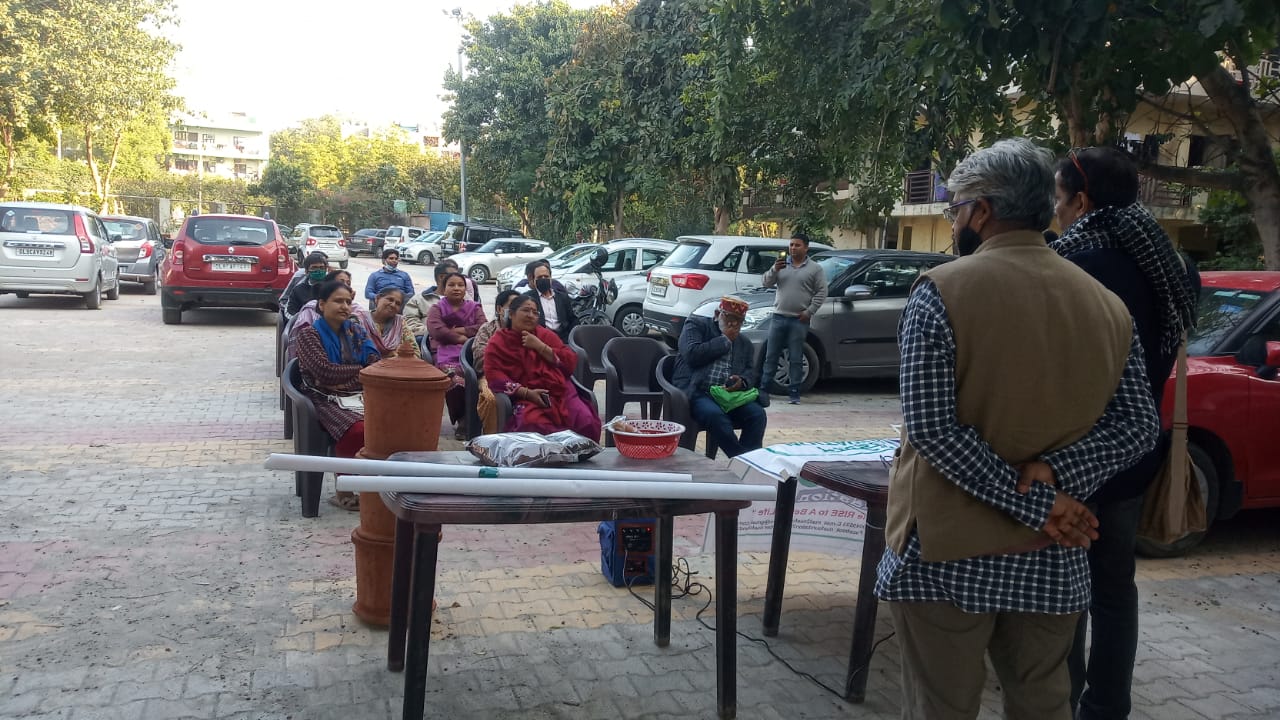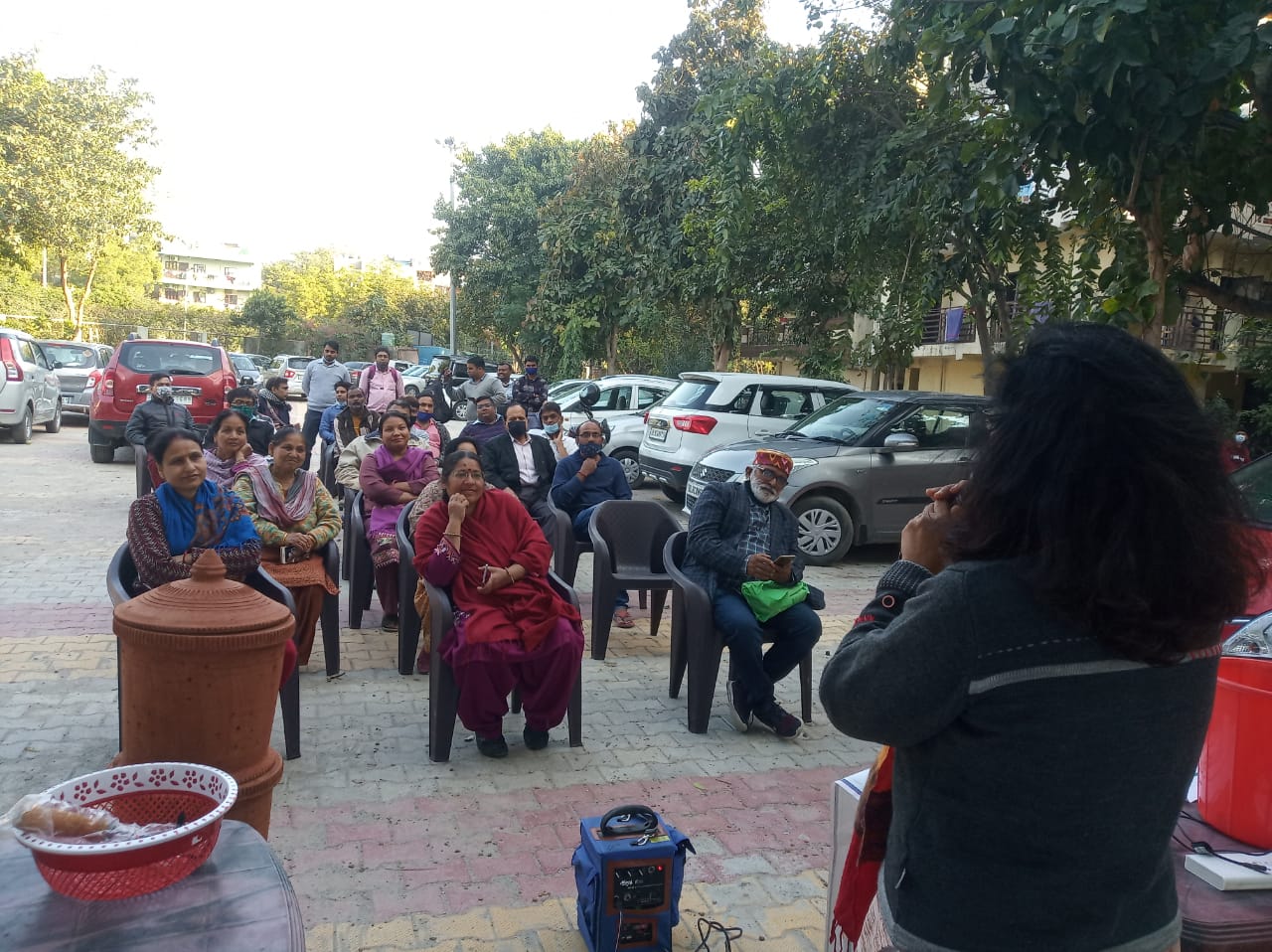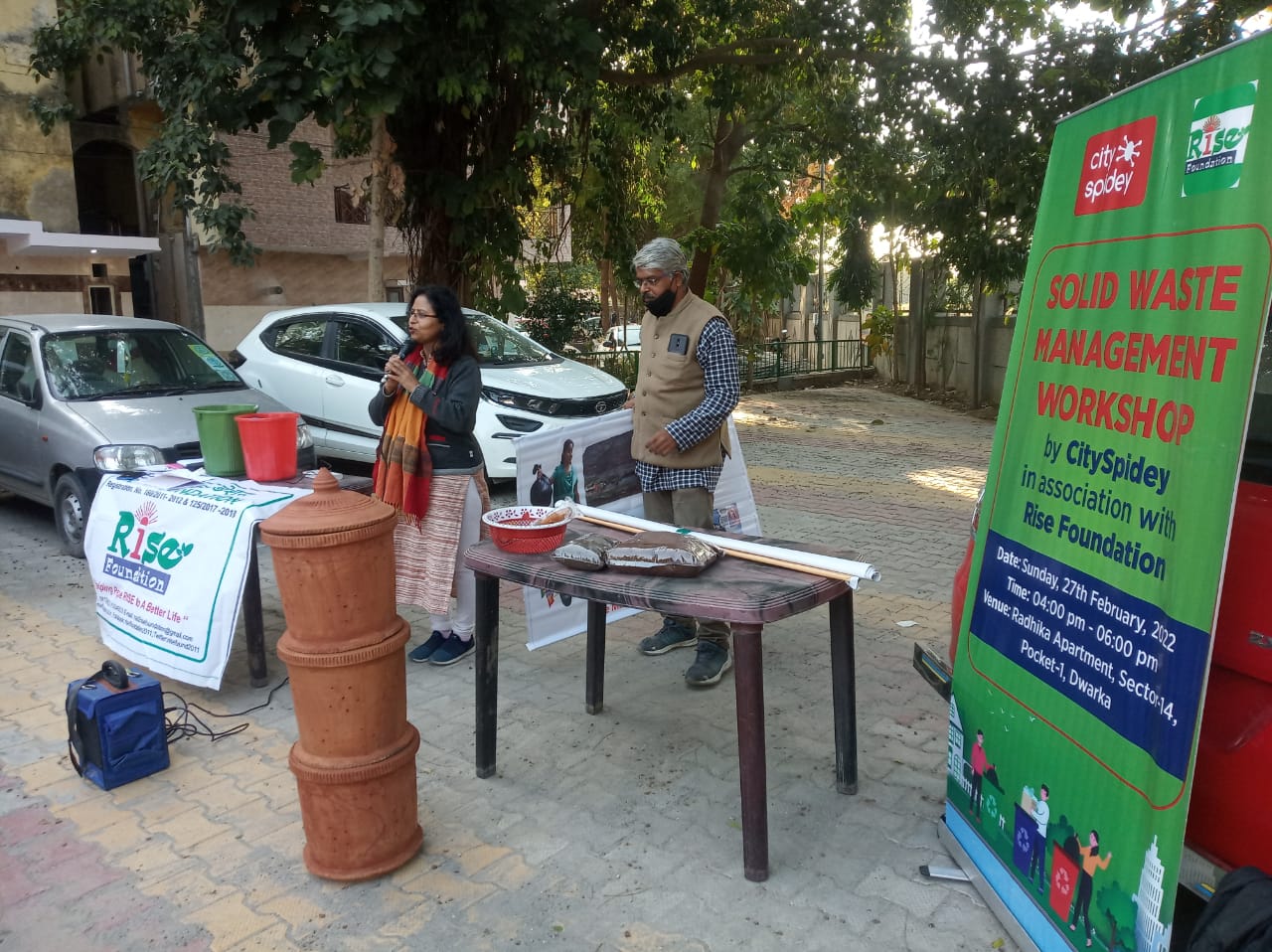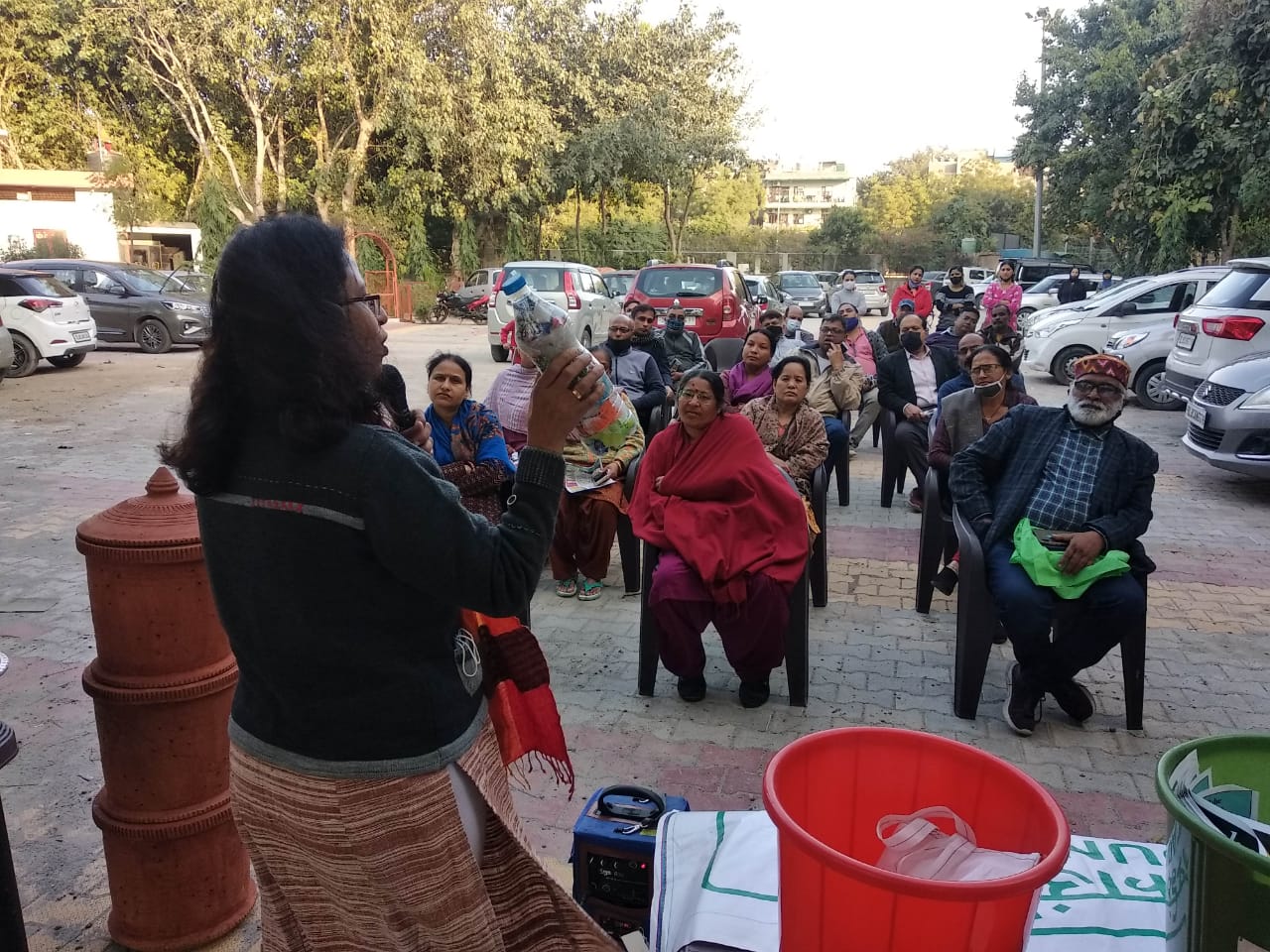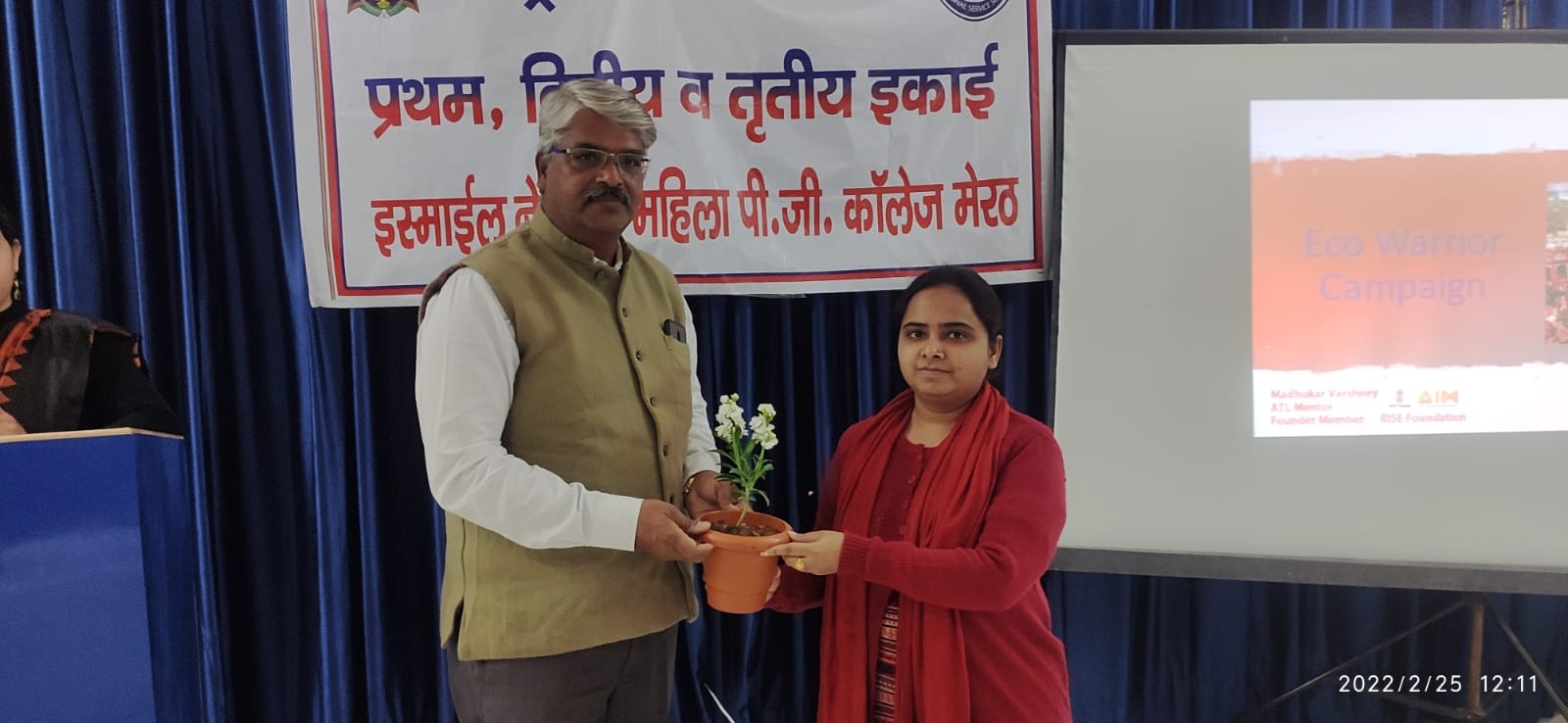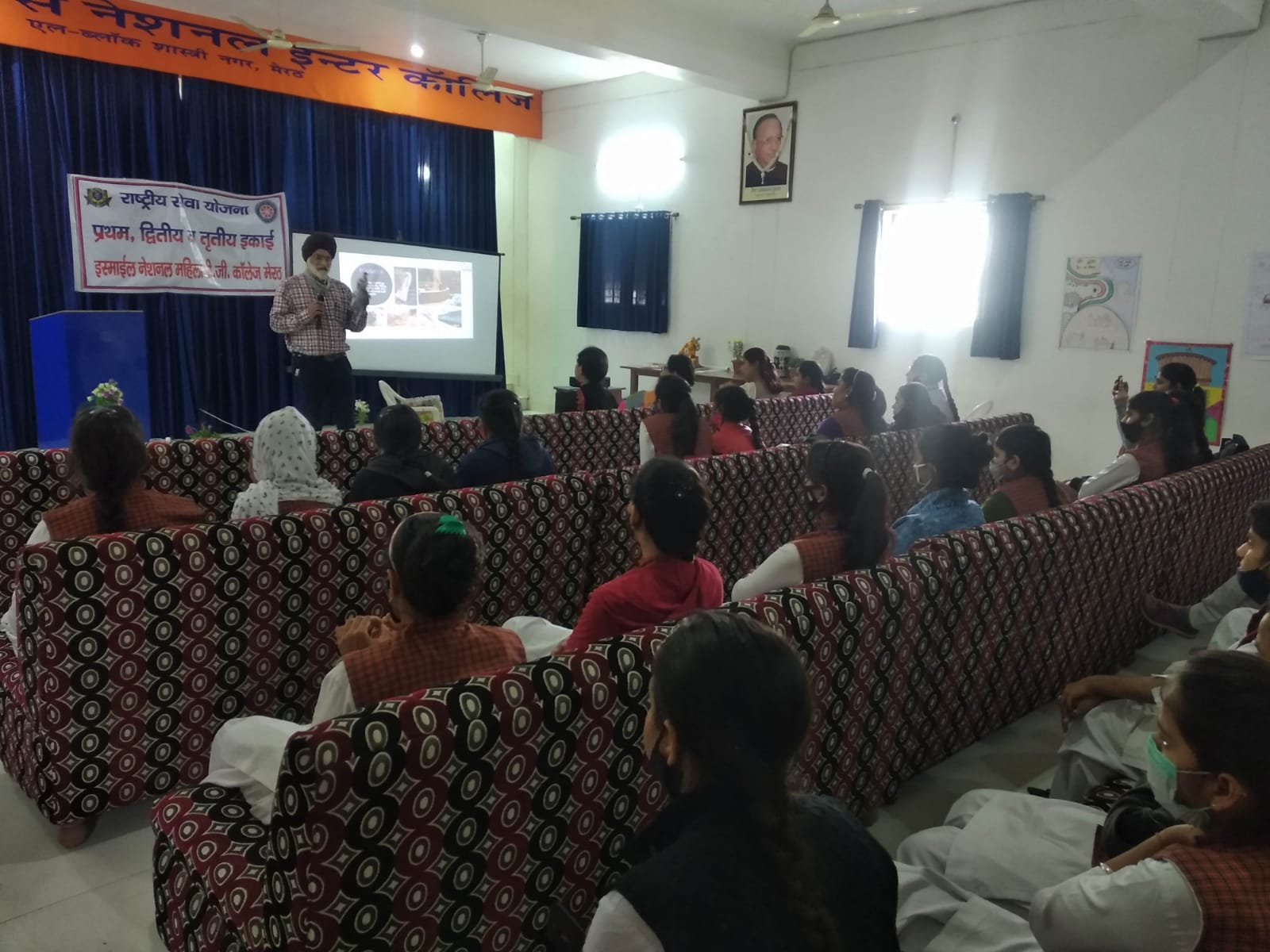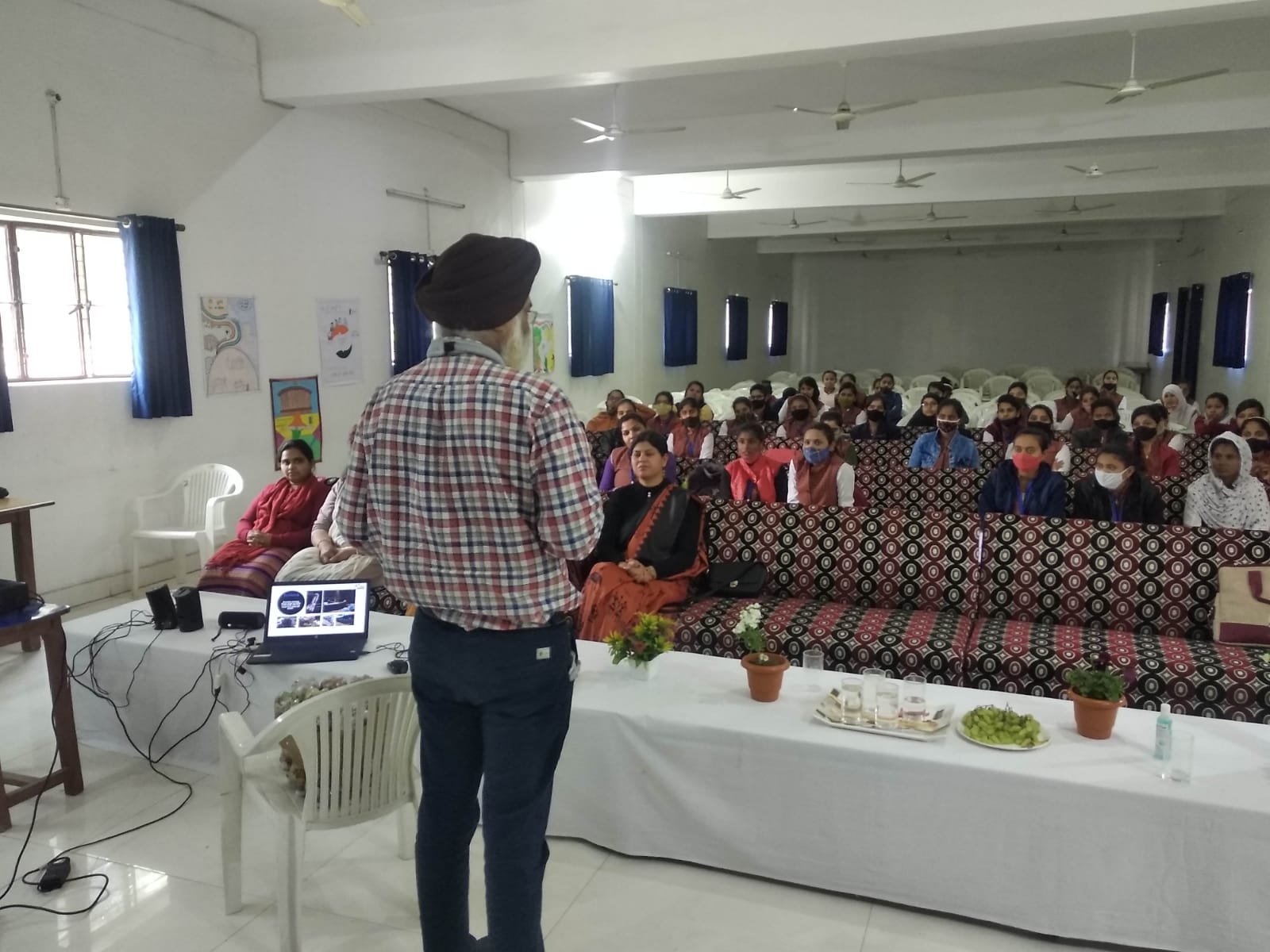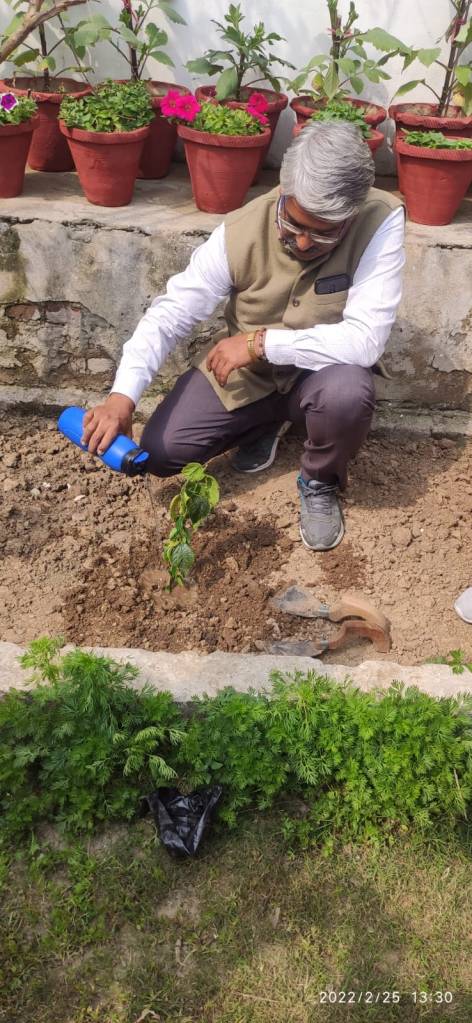
Team Rise Foundation has achieved another mile stone in creating awareness about Solid Waste Management, Plastic Pollution through games.
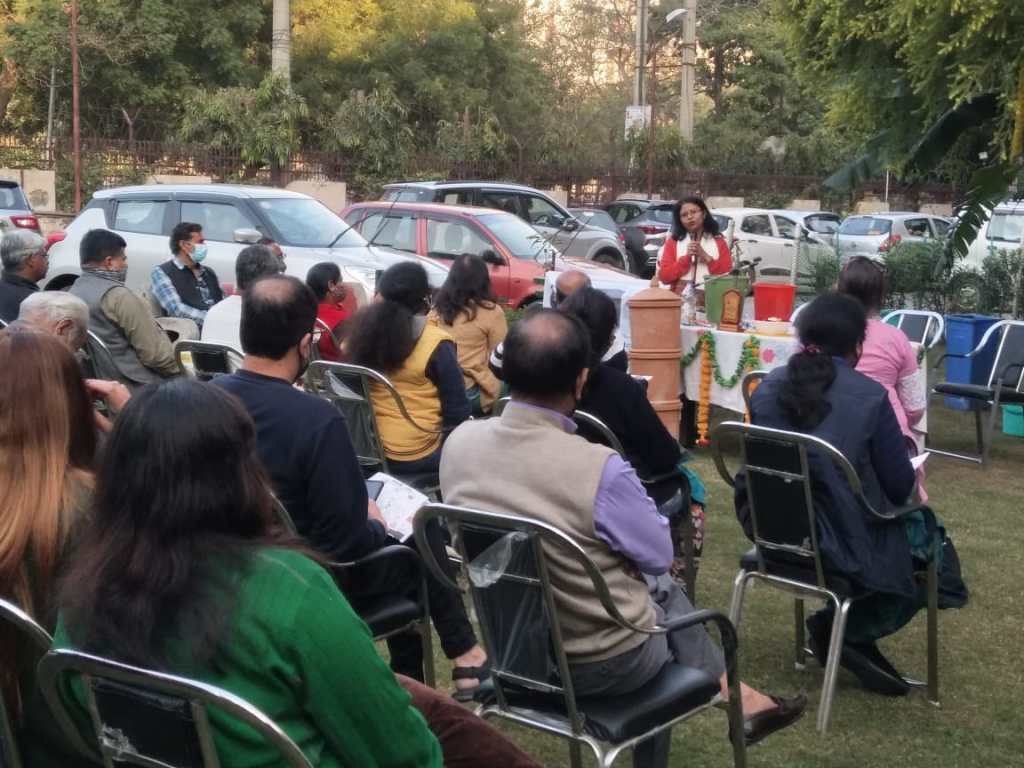
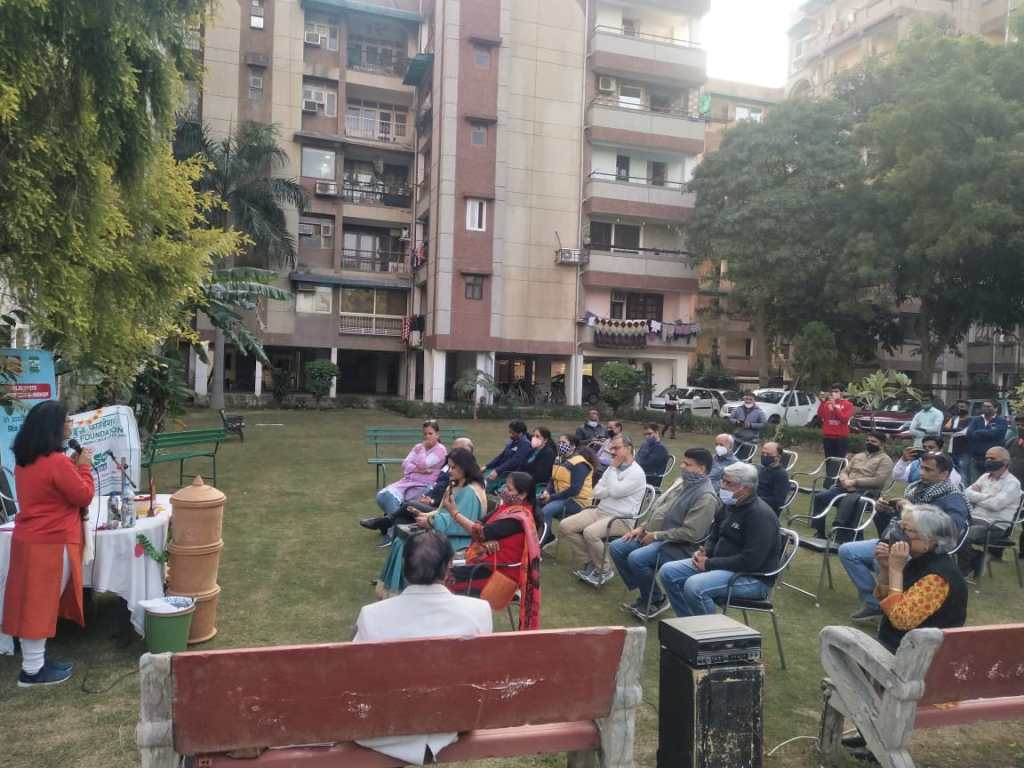
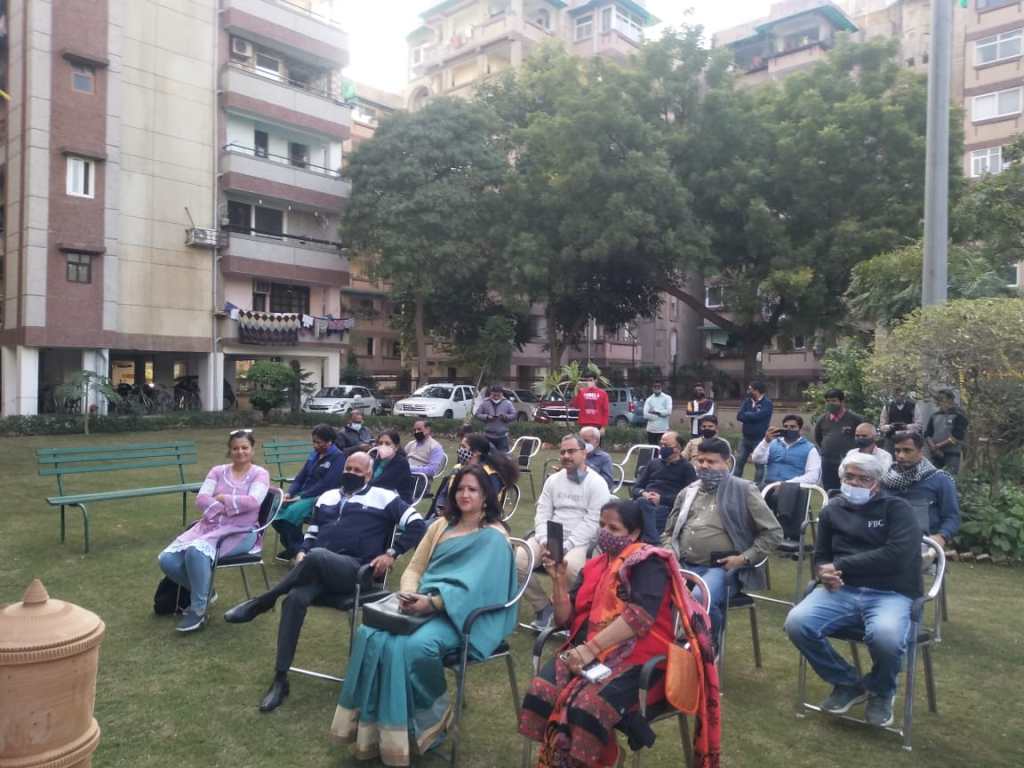
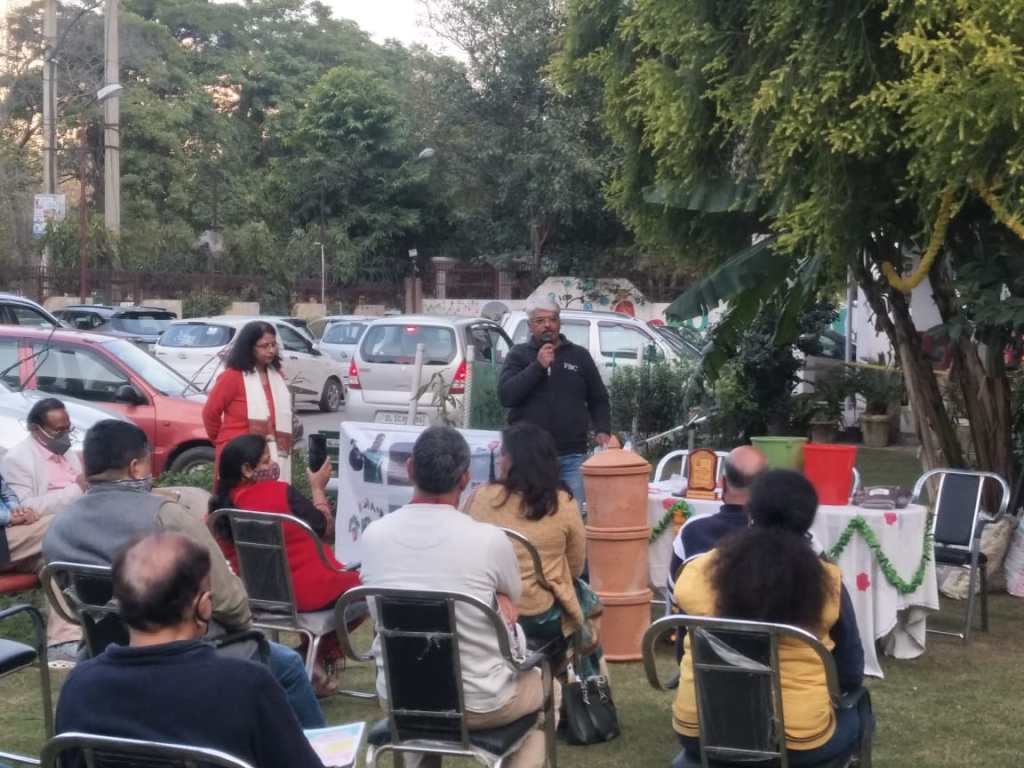
Recently the Snake and Ladder Game is inaugrated by Palam MLA Ms Bhavan Gaur at Brahma Apartments, Sector 7, Dwarka.
It is learnt that the Snakes and Ladder game is one of the most popular game in India between the kids and the adults equally. For kids the Snakes and Ladder games help in Counting, Numeral Recognition ,Sequential Numbers, Maths and Fun obviously. We added the messages related to Waste Segregation, Plastic Waste and Composting to get the extra flavour of awareness.
Same is quite visible here in the video.
Soon Rise Foundation will bring more fun with more games. Learn while play.
“Do things for people not because of who they are or what they do in return, but because of who you are.” – Harold S. Kushner
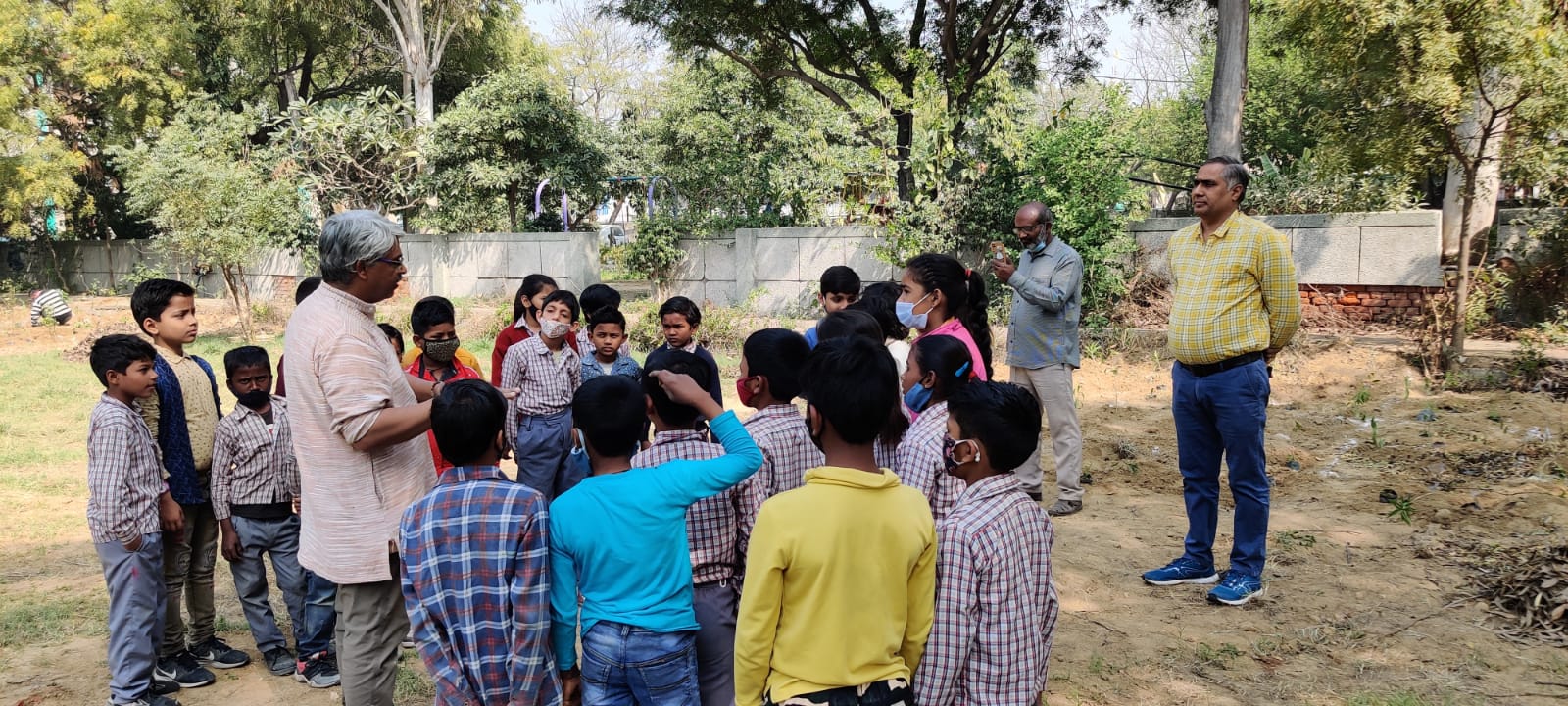
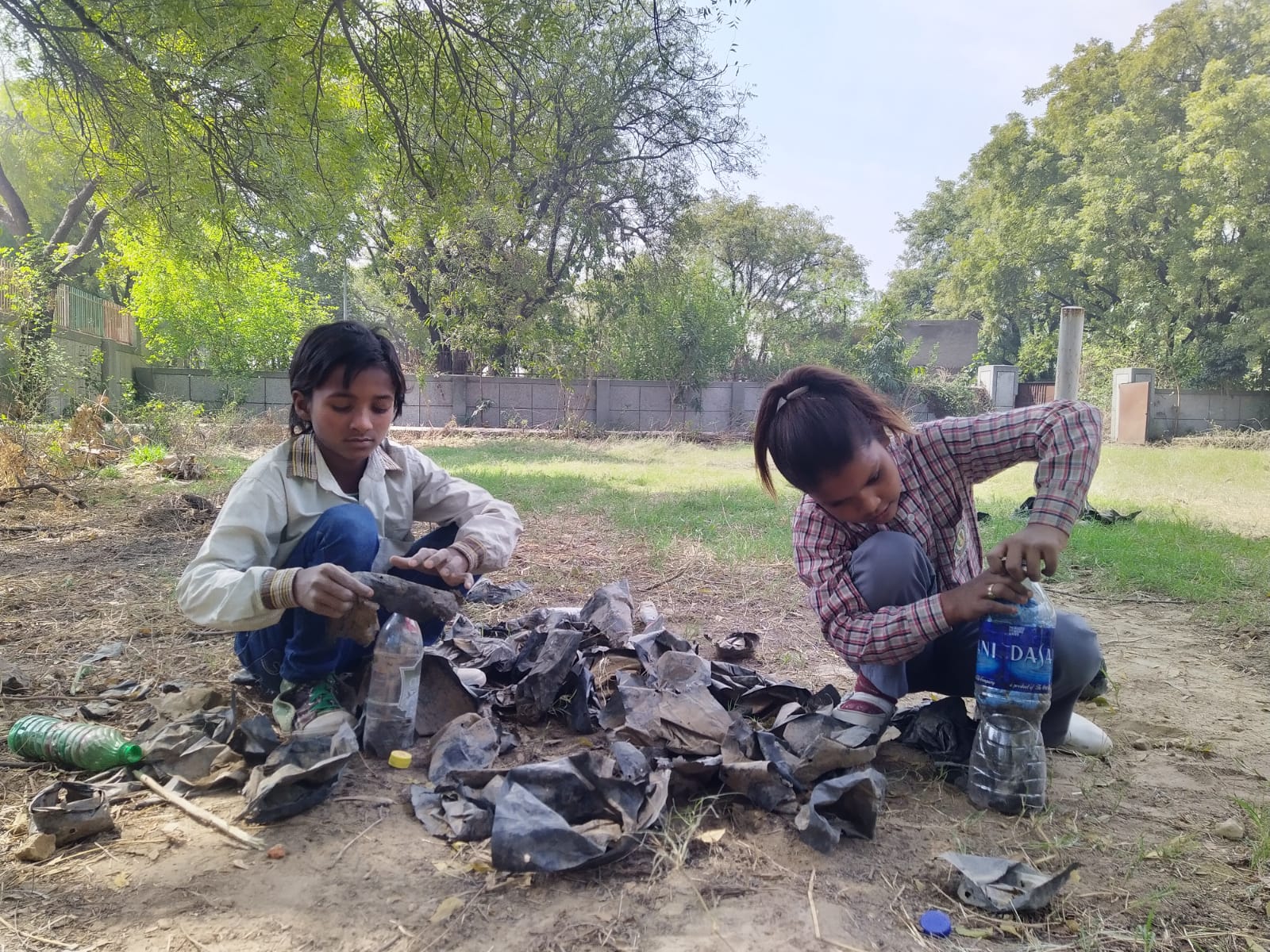
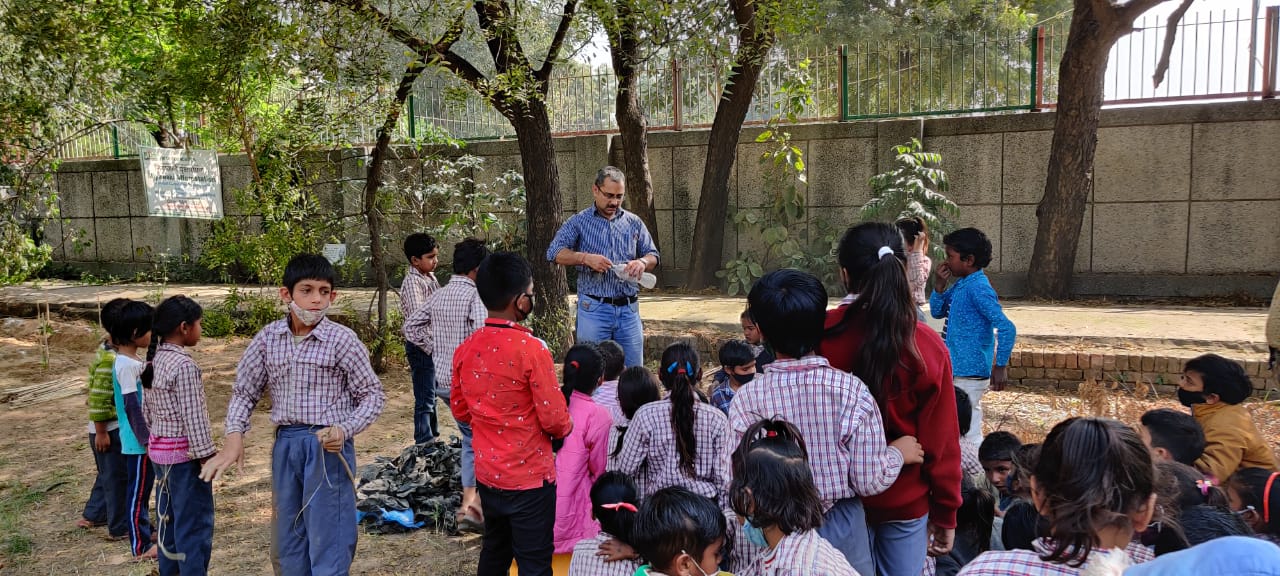
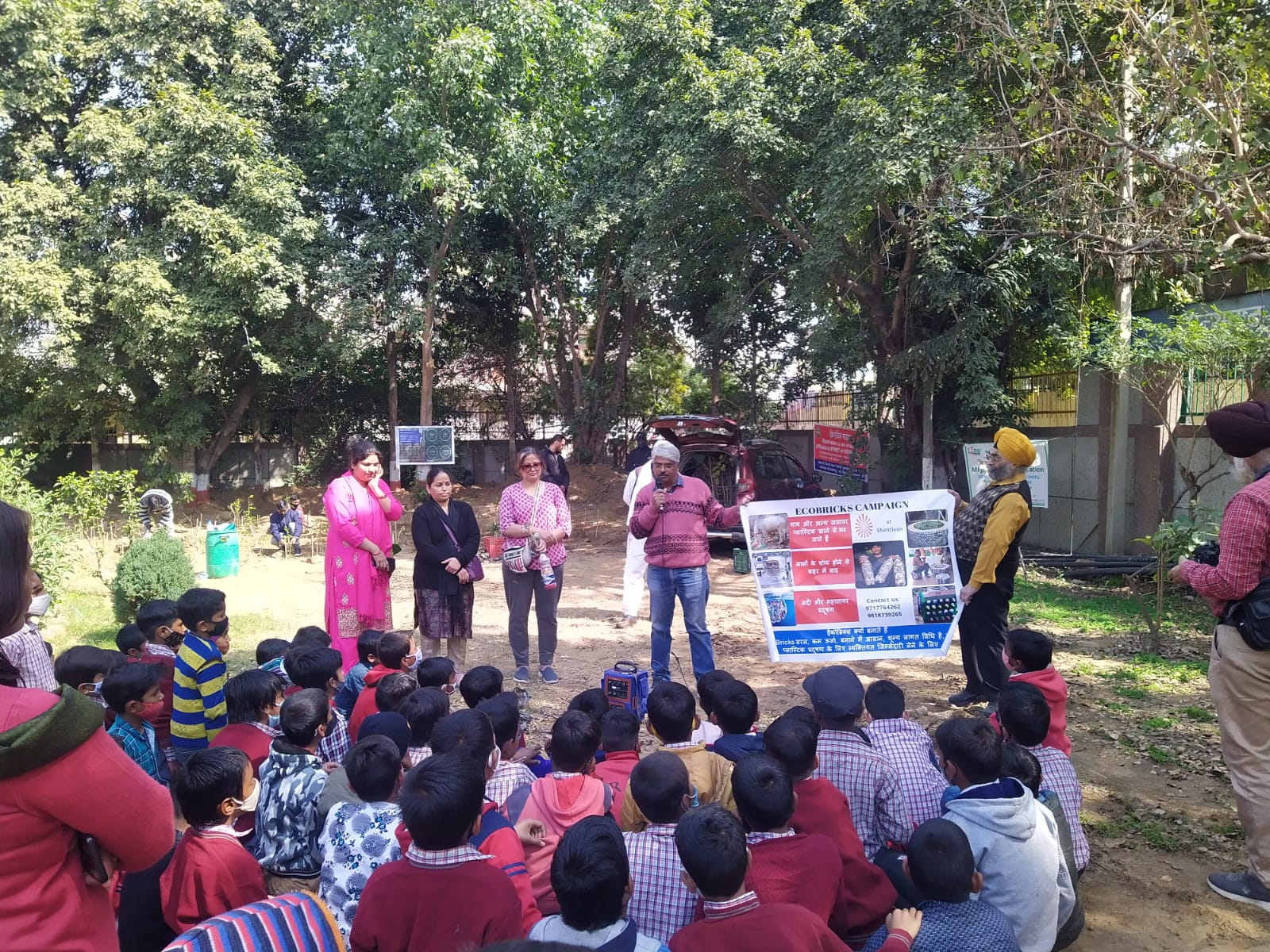
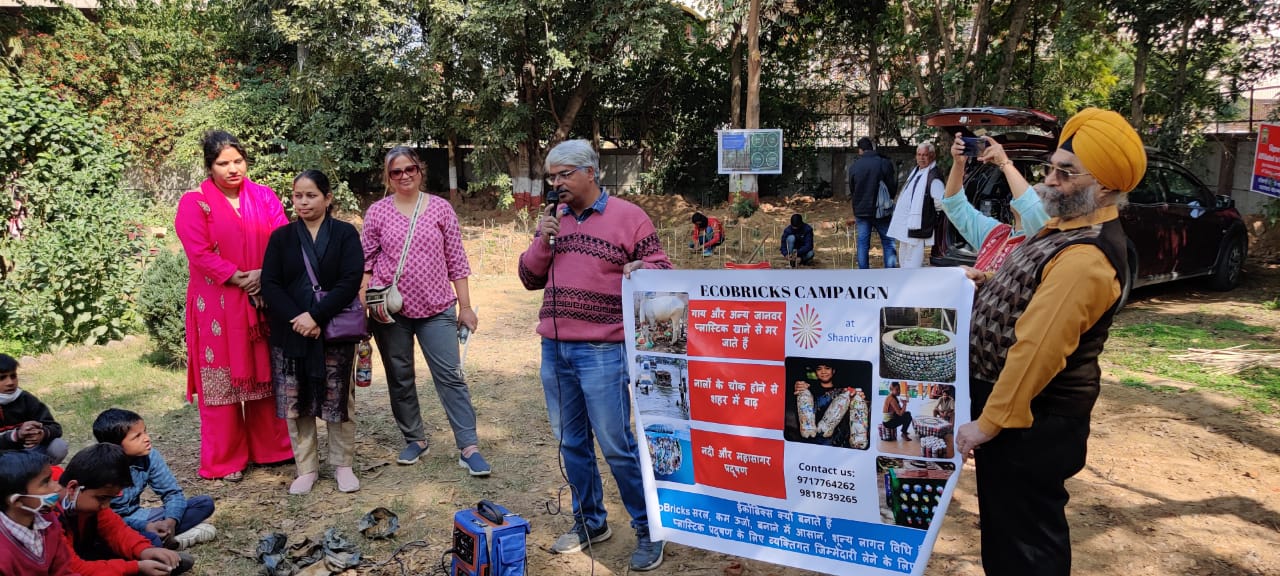
Tagore Global school Kurkshetra learned how to recycle plastic into Ecobricks on 22nd Dec 2021 from our Team member Indrajeet Singh Sir. Indrajeet Sir recently retired from Airport Authority of India and willing to serve for various social cause. He is quite impressed with the idea of Ecobricks and started promoting the concept in personal capacity to his friends and relatives. We thanks him to participate in cause of Plastic pollution, which cause Littering, Urban Flooding, River Pollution, Ocean Pollution and many animals like Sacred Cow in India consumes large amount of plastic and impacted heavily.
Indrajeet Sir carried out a workshop on Plastic Pollution and Ecobricks to the students of Tagore Global School at very short notice.
Ecobricks are a sustainable building material and an innovative way to store tonnes of our non-recyclable plastic. However, it is not a long-term solution to the problem of single-use plastics.
Students Feedback – “It was a very informative session and a bit of an eye opener on how little of our plastic waste gets actually recycled. Everyone in class is ready now to build Ecobricks.”
Tagore Global School, Kurukshtra believes in delivering quality education to the students.
Rise Foundation want to engage as many people as possible in creating their own Ecobricks. We can hold virtual workshops to teach people the basics and then they can create the bricks in their own time. This could also be something that people do in the office with their colleagues. To organise a session for your school, team or company, please contact +91 9717764262 or mail2risefoundation@gmail.com
Radio Madhuban 90.4 FM is a Community Radio Station licensed under the Ministry of Information and Broadcasting, Government of India operational in Abu Road, Rajasthan, India since 2011. Radio Madhuban works for the development and upliftment of local community by informing, educating, enlightening and awakening the masses. India’s first value-based community radio station, the station promotes living values and moral development in all spheres of life. With special focus on areas like education, sustainable development, women and youth empowerment, health & hygiene and organic farming, Radio Madhuban provides value-based education and infotainment 24×7. With a variety of on-air shows and thematic village-outreach programs, Radio Madhuban has been successful in building strong bonds with the local community.
The ocean is said to be Earth’s life support, with 97% of the world’s water held by the ocean. We rely on it to regulate our climate, absorb CO2 and it is the number one source for protein for over a billion people.
Yearly, up to 12.7 million tonnes of plastic enters our oceans. It escapes from landfill sites, floats down our drains, ends up in rivers and makes its way into our oceans.
We are all well aware of the dire state of plastic pollution happening in our oceans and how plastic is now the number one enemy of everyone.
Besides Ocean pollution, there are many other problems observed in India by Plastic Pollution :
Above information is shared with students of DPS (Delhi Public School) Rohini, New Delhi thru online webinar on 10th Dec 2021 by Rise Foundation team members Madhukar Varshney and Munish Kundra. More than 750 students joined the webinar.
So, we told them, there is a way to reduce the amount of plastic being thrown into the ocean? Plus, they can actually do it from the comfort of your home and it requires only 2 minutes of your time?
What exactly is this magical method that holds the potential of solving the top global problem now?
Well, the answer is – an Ecobrick! Here is the basic information you need to know about these magical building blocks.
What is an Ecobrick?
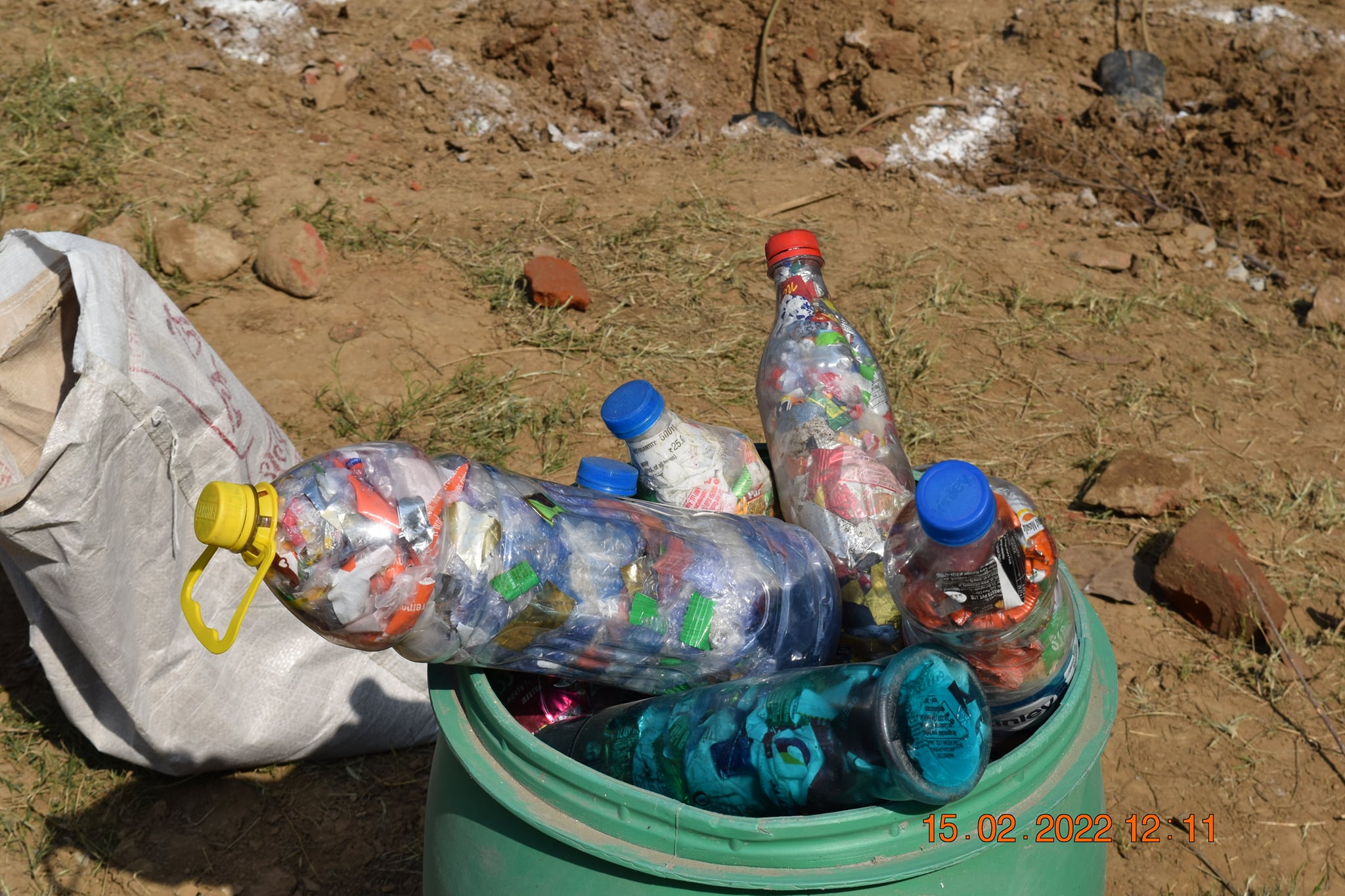
An Ecobrick is essentially a reusable building block created by solid non-biodegradable waste placed into a plastic bottle to a set density.
By packing the bottles with a set density, it makes them suitable building blocks for virtually any construction. They can also be packed with other non-biological un-recyclables that, uncontained, are toxic to the environment (i.e. styrofoam, wires, small batteries, etc.).
Ecobricks are a sustainable way to reuse non-biodegradable plastic waste as plastic waste is regarded as a long-lasting and durable material. Hence, keeping plastic out of the ecosystem and prevents the contamination of the environment.
Ecobricks are used to make many things such as furniture, walls and buildings. It allows communities and companies to get control of their plastic waste to create modular furniture, garden spaces, walls and even full-scale buildings.
How does it help the environment?
EcoBricks prevent plastic waste from disrupting the ecosystem: Usually, when thrown away, plastic breaks down into tiny pieces and contaminates the area where it is. EcoBricks arrest and seal the plastic away preventing the buildup of toxic gases emitted during the degradation of the plastic, such as methane when it reached to landfill and react with other waste.
PET bottles are perfect for sealing away the plastic because they have an incredible longevity and protect the contents from UV rays.
Ecobricking raises ecological consciousness: We often do not think about the afterlife of our discarded plastic bottles. Ecobricking addresses our short-sightedness, as making Ecobricks demands time and dedication, it leads to questions on the uses of plastic.
Ecobricks are a low energy solution to plastic: Recycling isn’t necessarily the best solution since the facilities demand technology, funds and a substantial amount of human energy. It also involves transportation and the waste can travel around the world before reaching its destination only to end up in a saturated recycling plant.
EcoBricks don’t require all that fuss, with anyone having the ability to make their own Ecobricks. It is a simple solution to a complex problem which can be applied anywhere by everyone.
Students took the pledge to make ecobricks and help us to fight with Plastic pollution.
About DPS Rohini : Delhi Public School Rohini is a school located in Rohini, New Delhi, Delhi, India. The school was established on 3 July 1995 under the aegis of the Delhi Public School Society. AIM of DPS
” Education does not commence with the alphabet. It begins with a mother’s look, with a father’s nod of appreciation or a sign of reproof, with a sister’s gentle pressure of the hand, or a brother’s noble act, with meadows, with birds’ nests admired, but not touched, with creeping ants, and almost imperceptible elements with humming bees and beehives, with pleasant walks in shady lanes and with thoughts directed in sweet and kindly tones and words to nature, to beauty, to acts benevolent, to deeds of virtue and to the source of all-to God himself.”
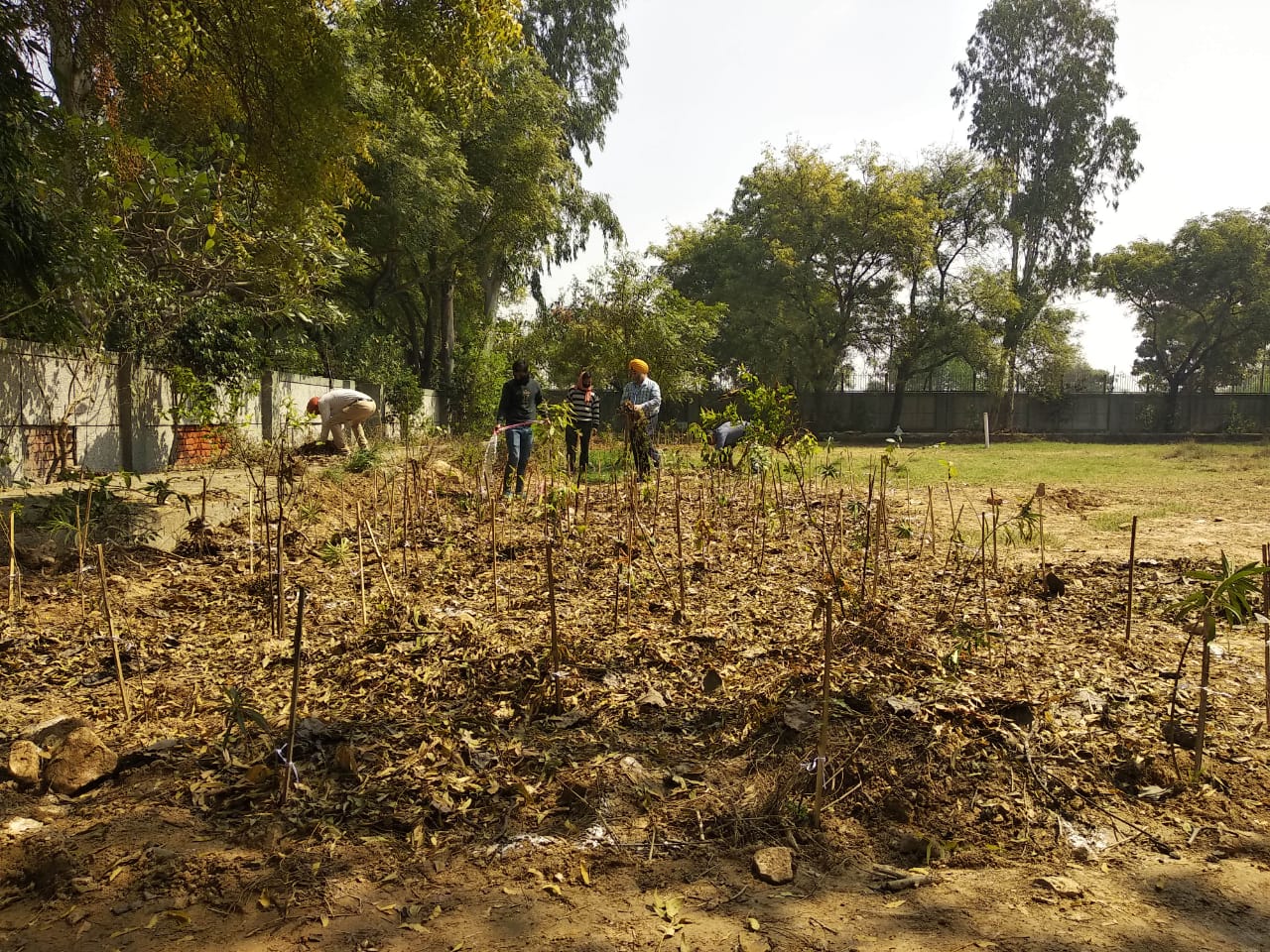
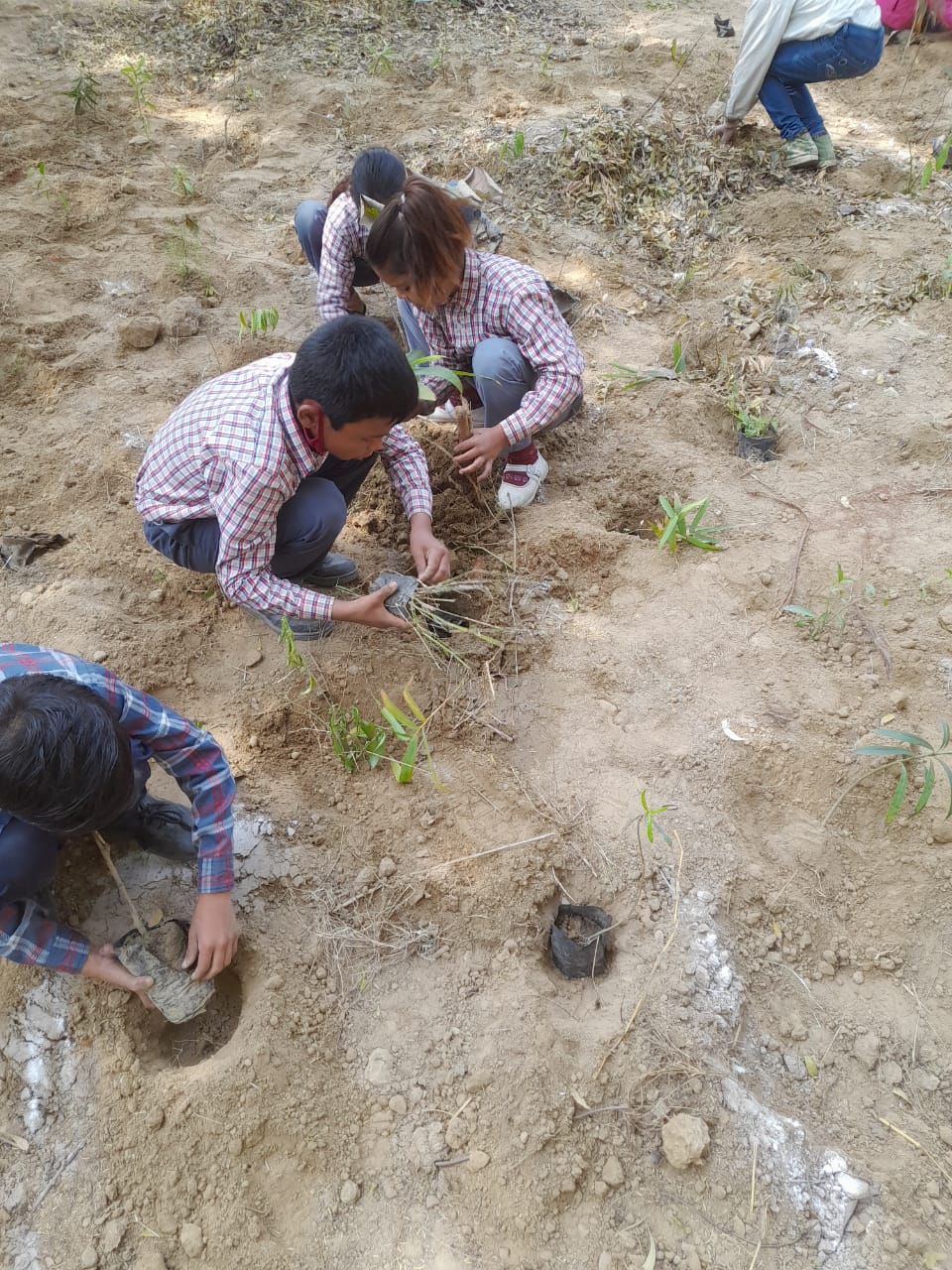
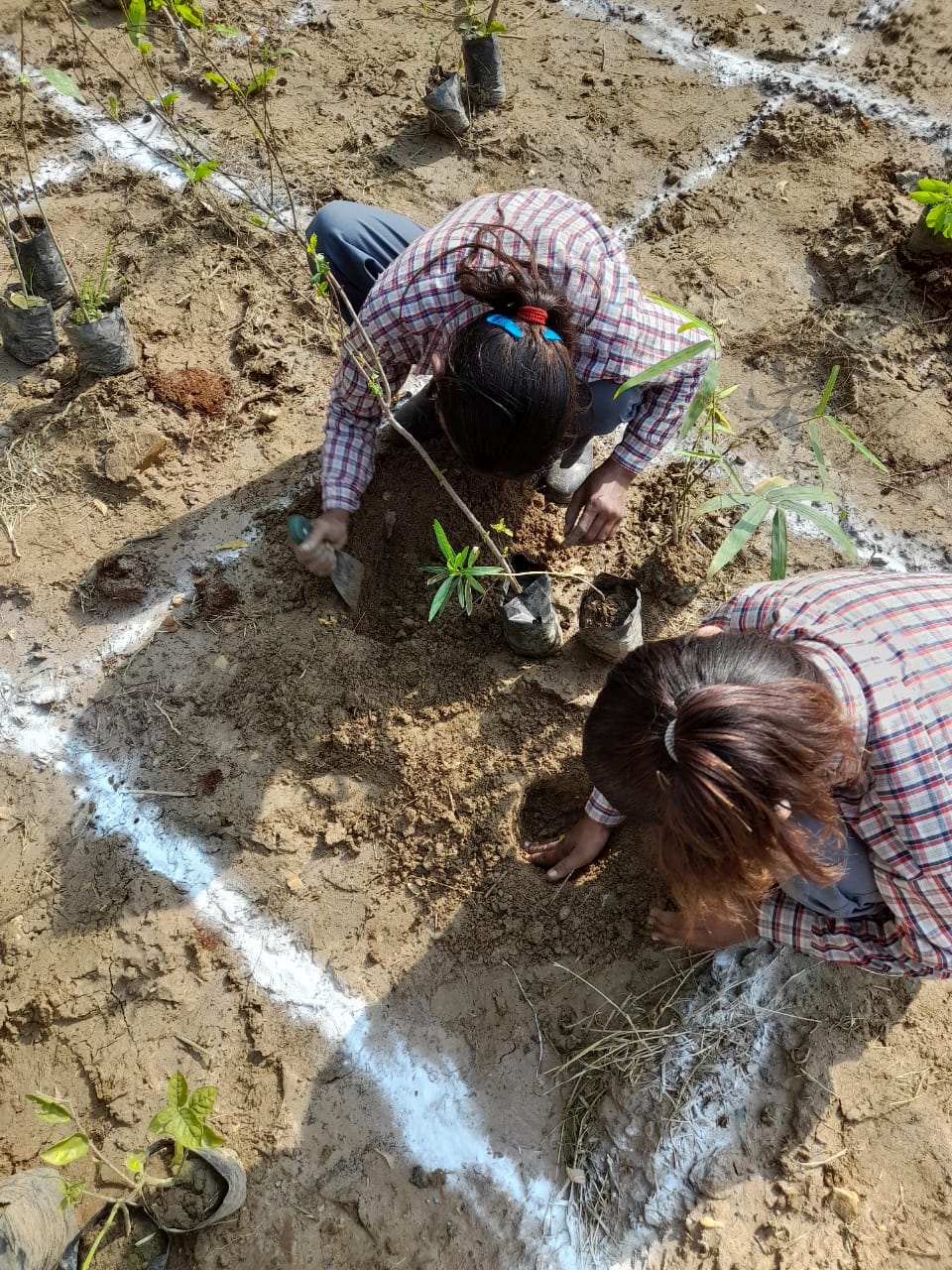
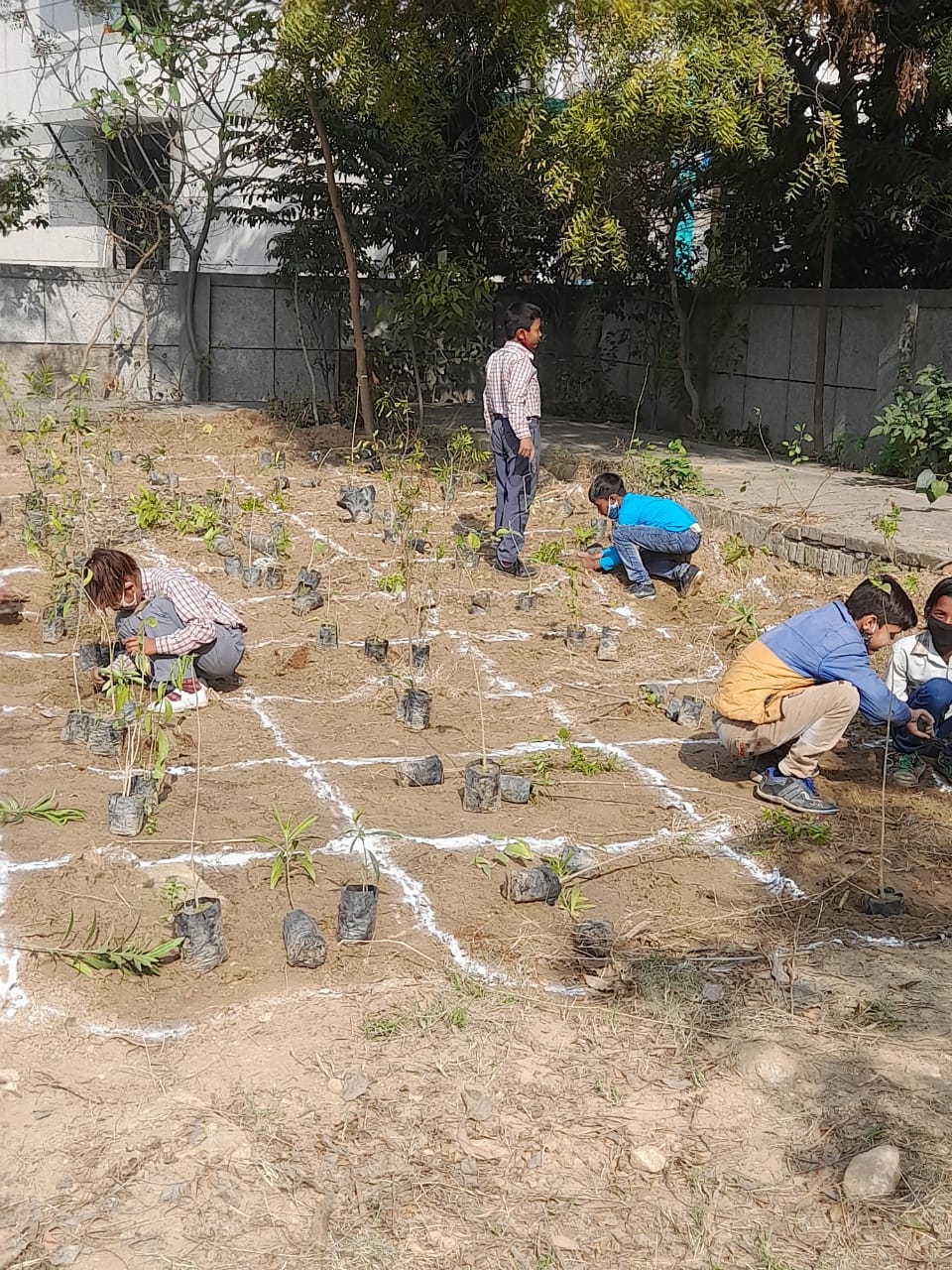
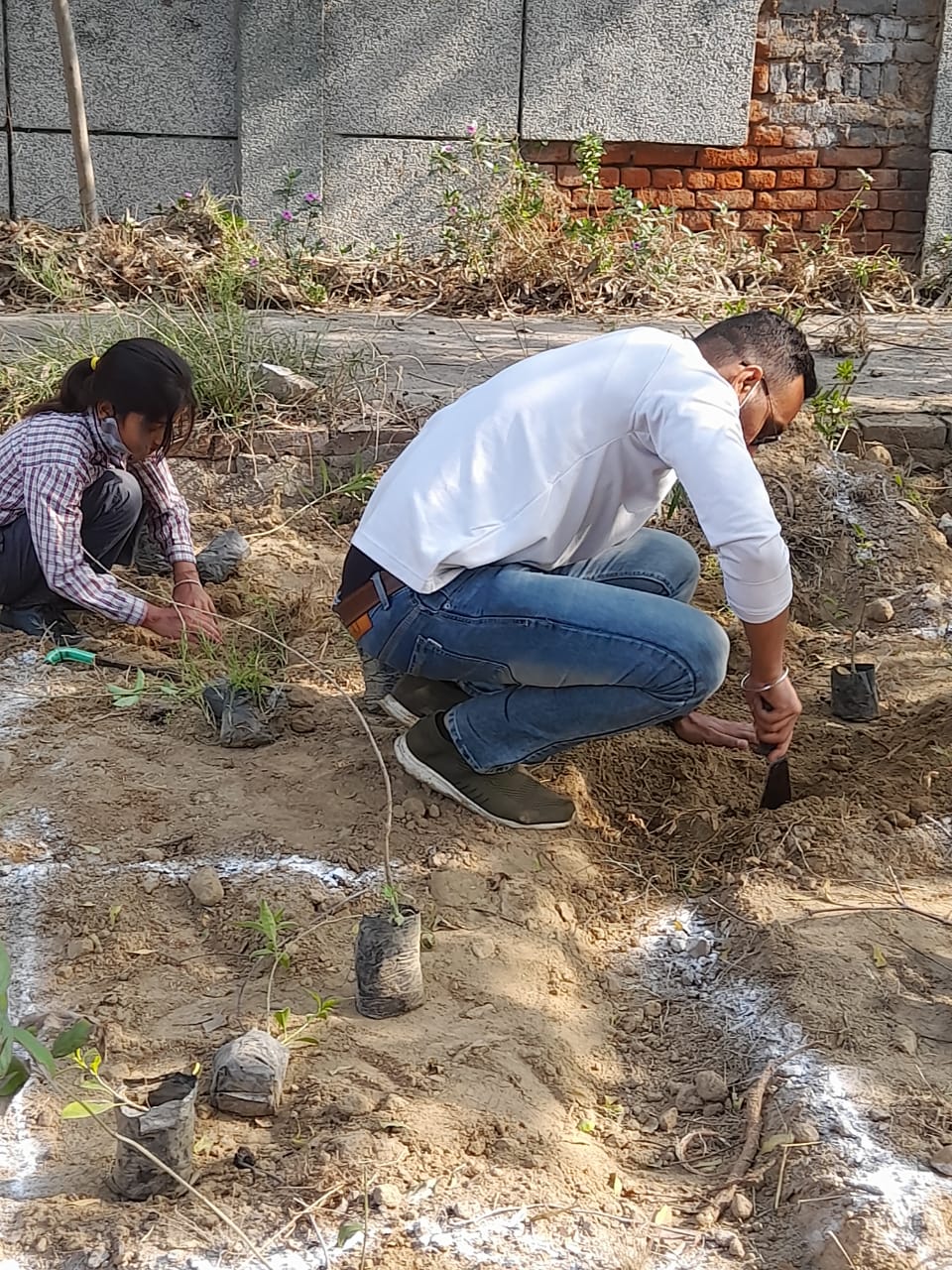
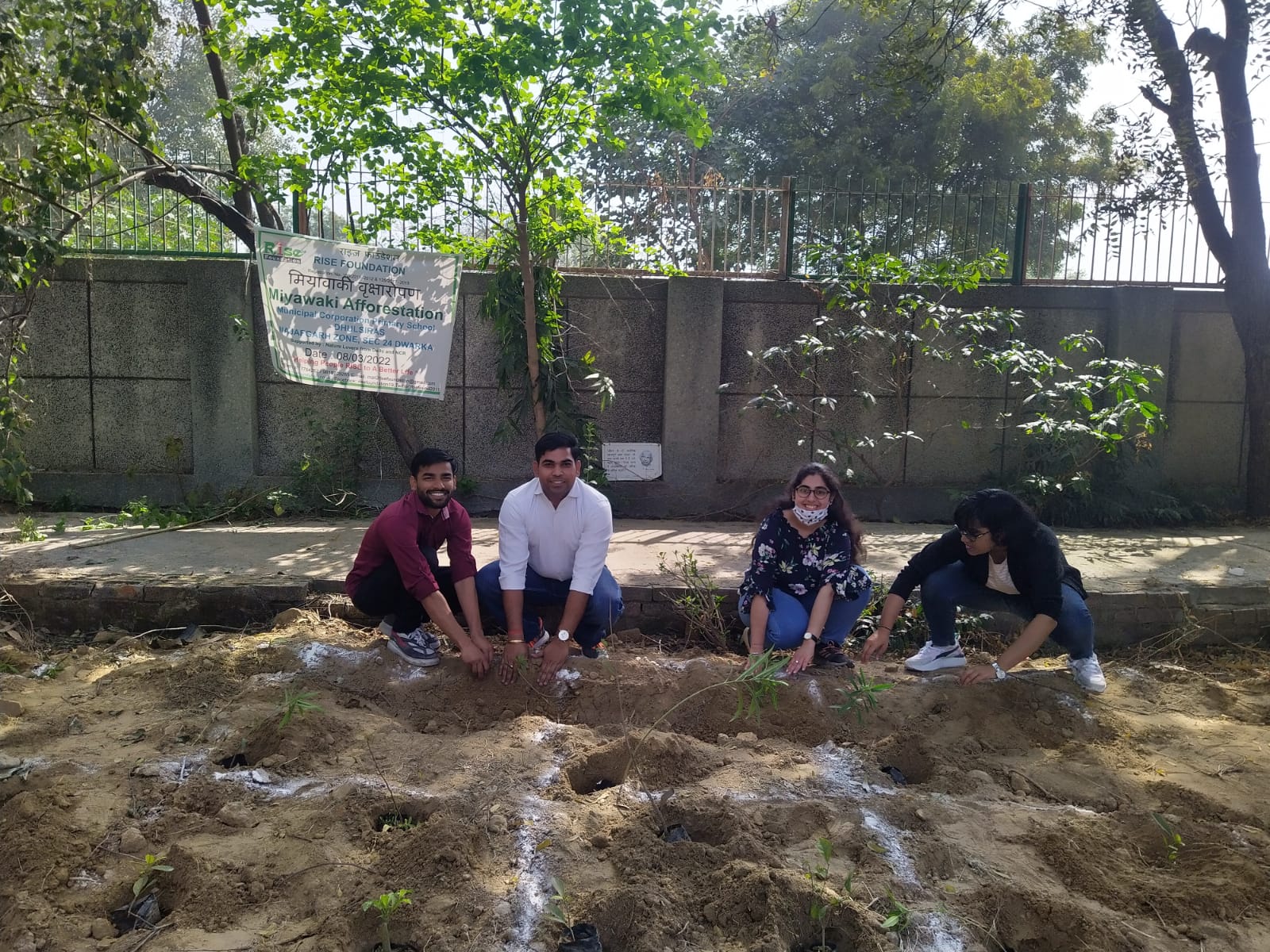
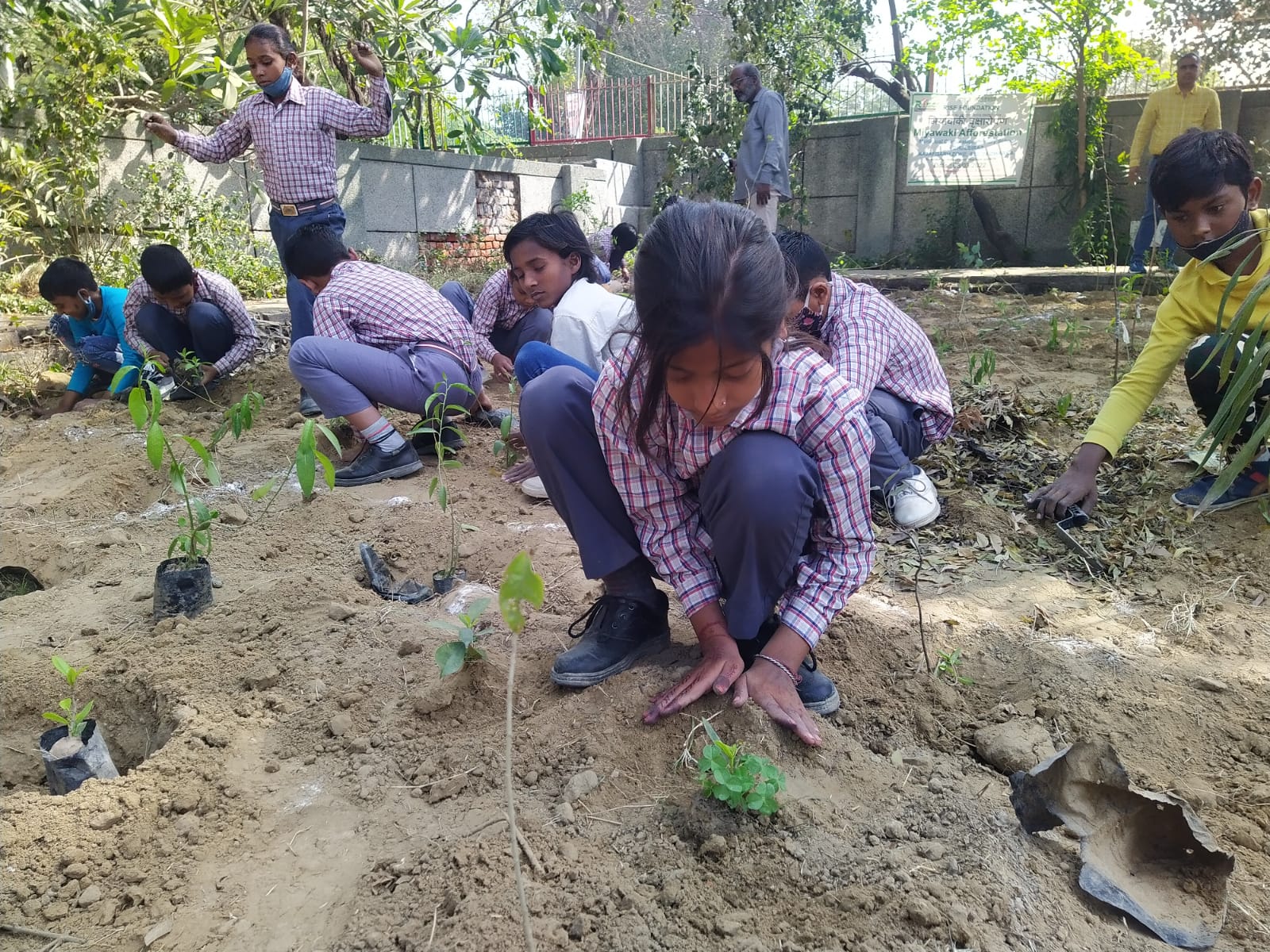
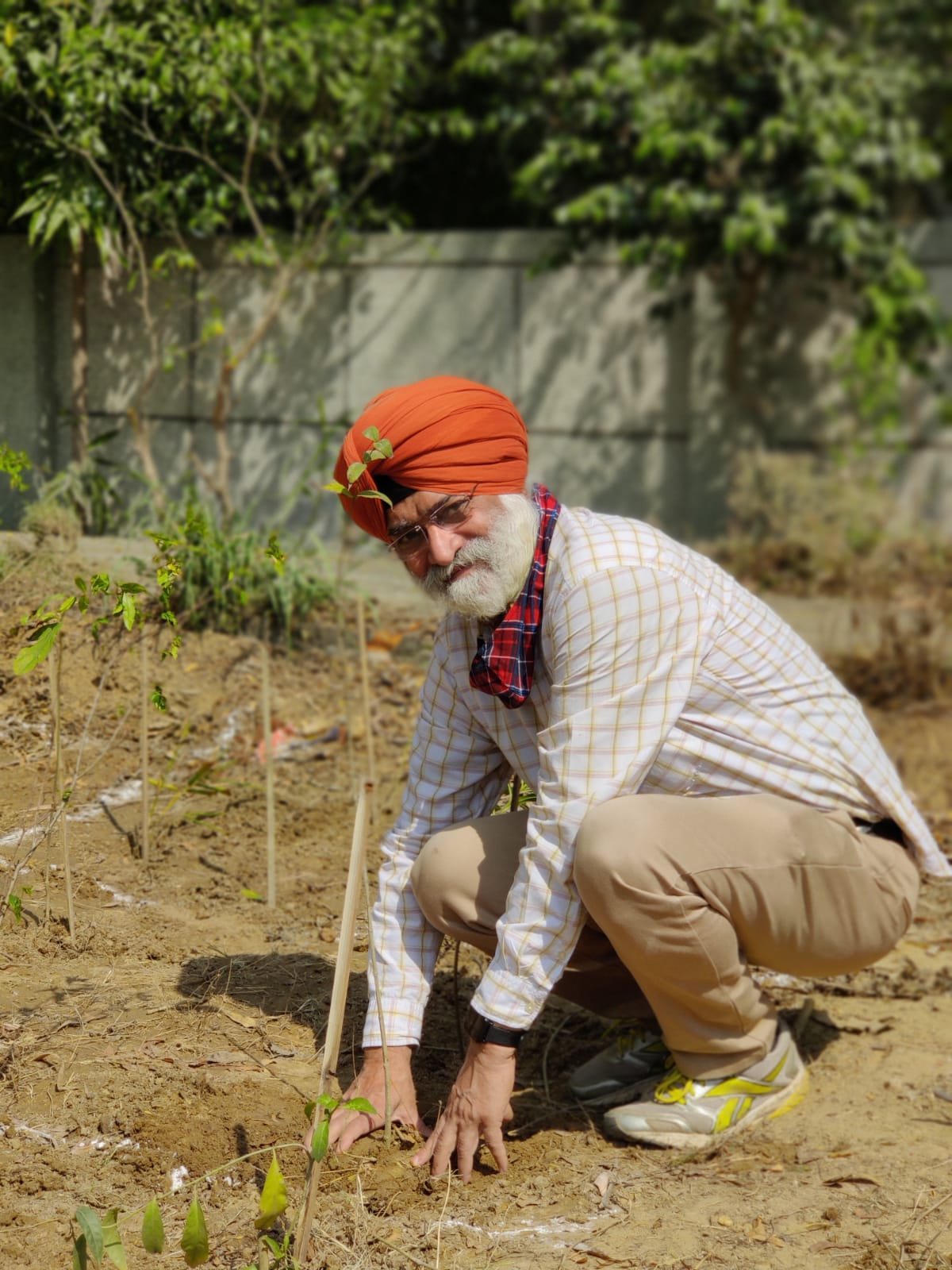
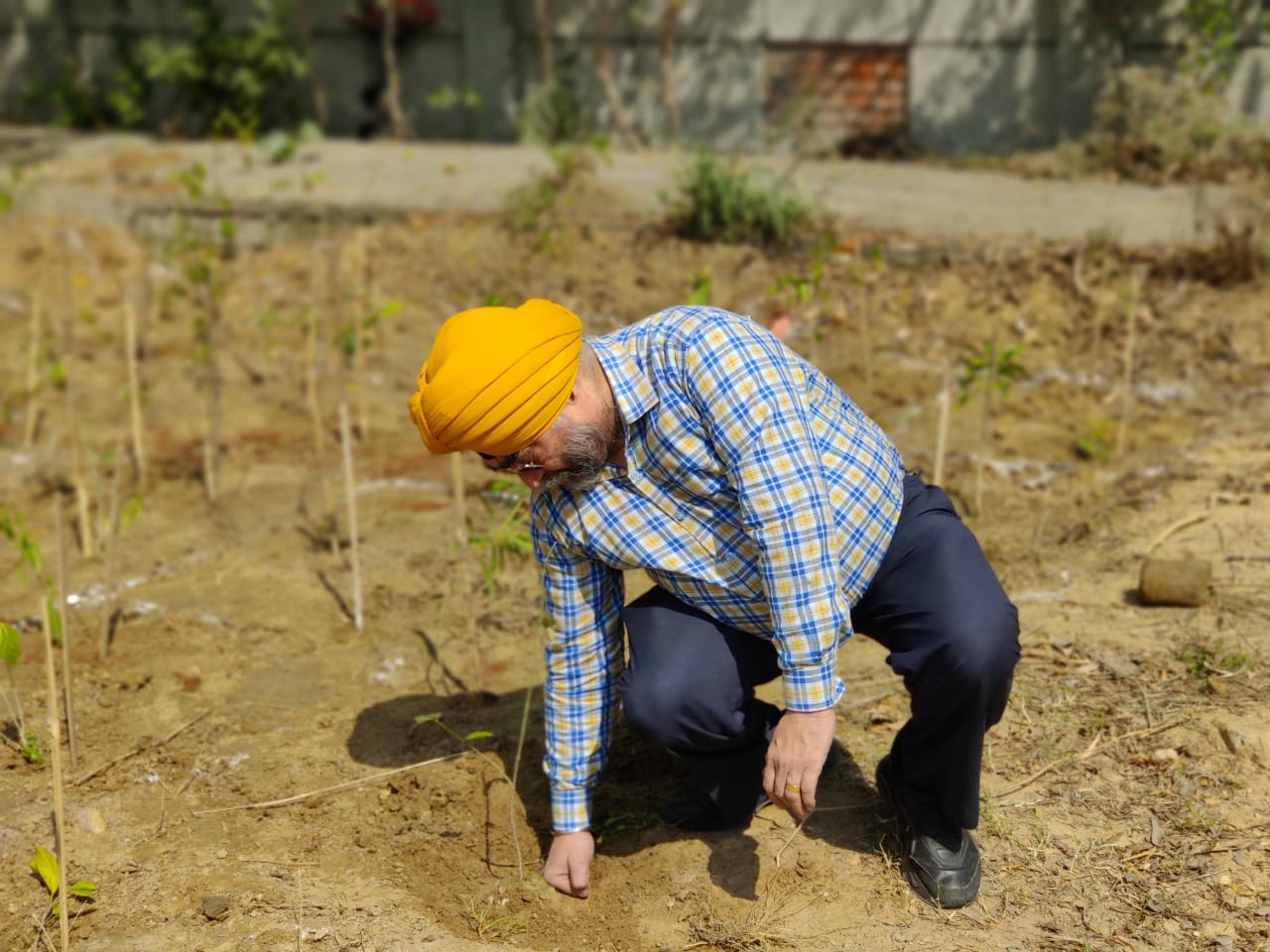
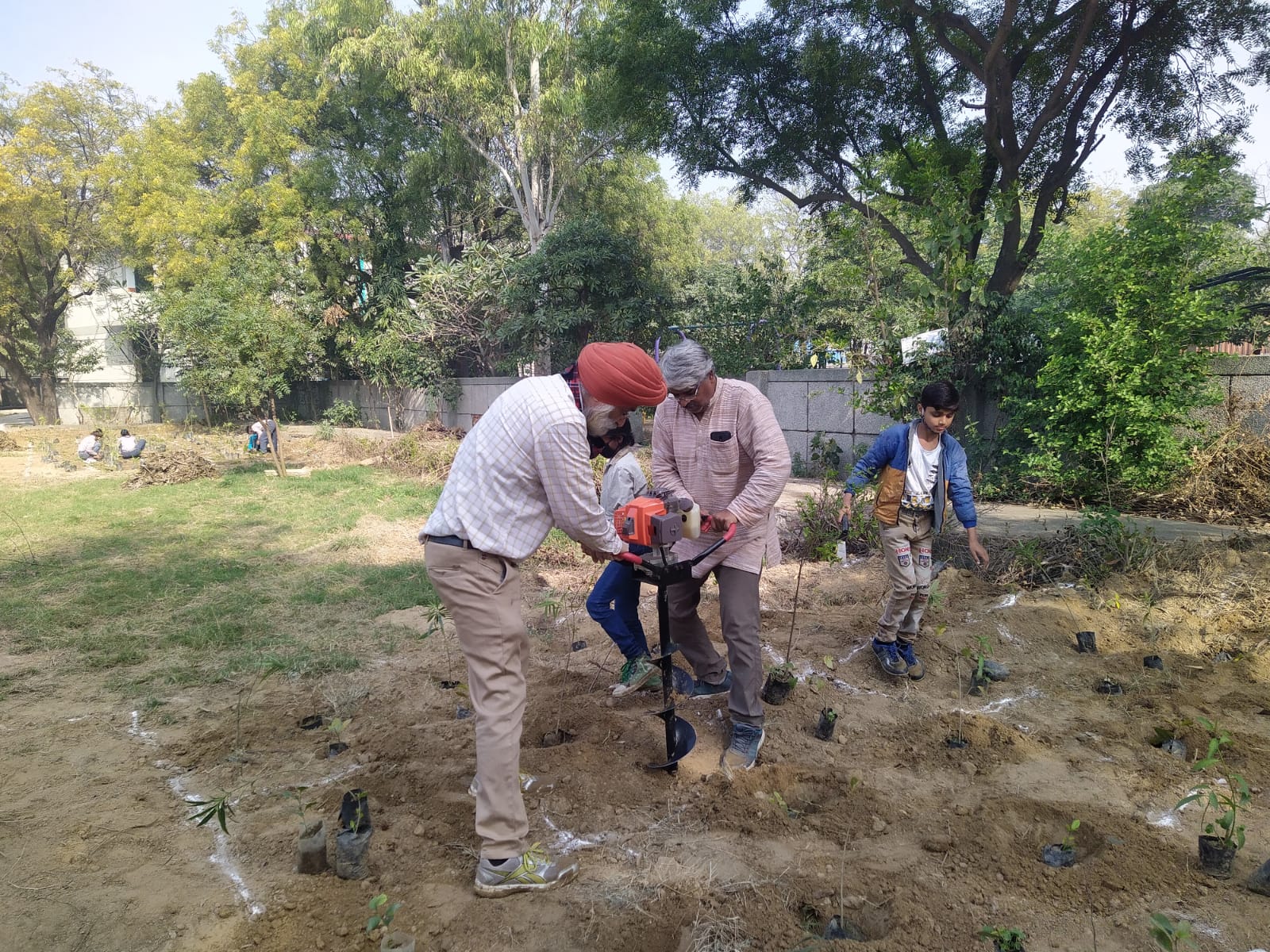
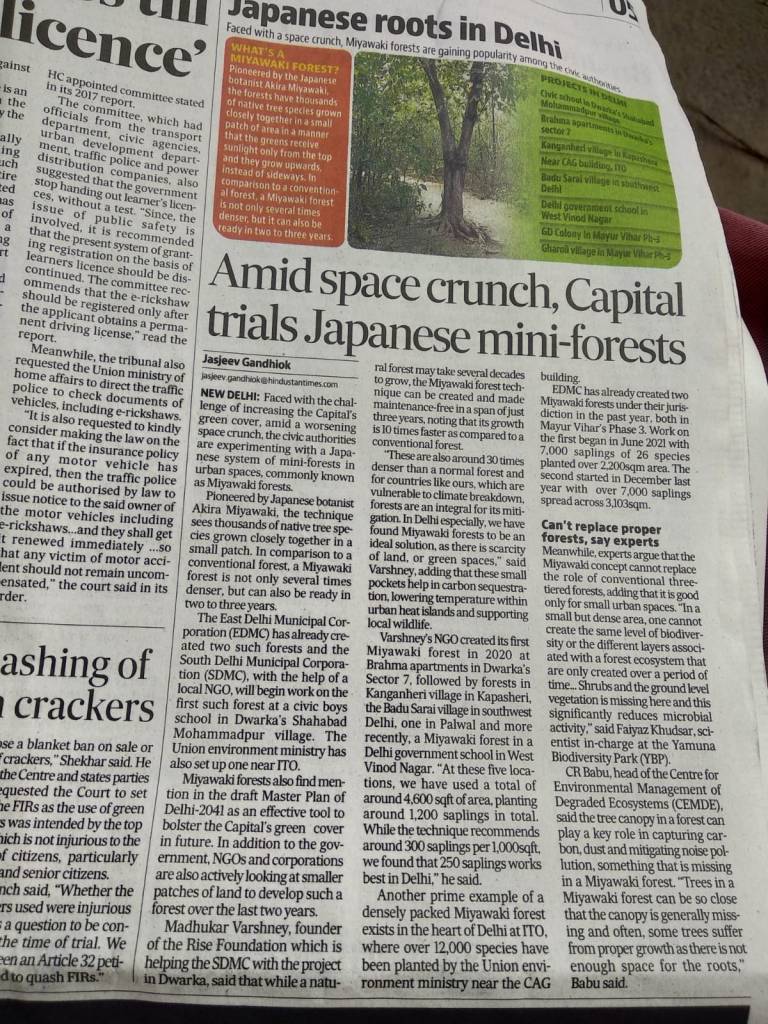
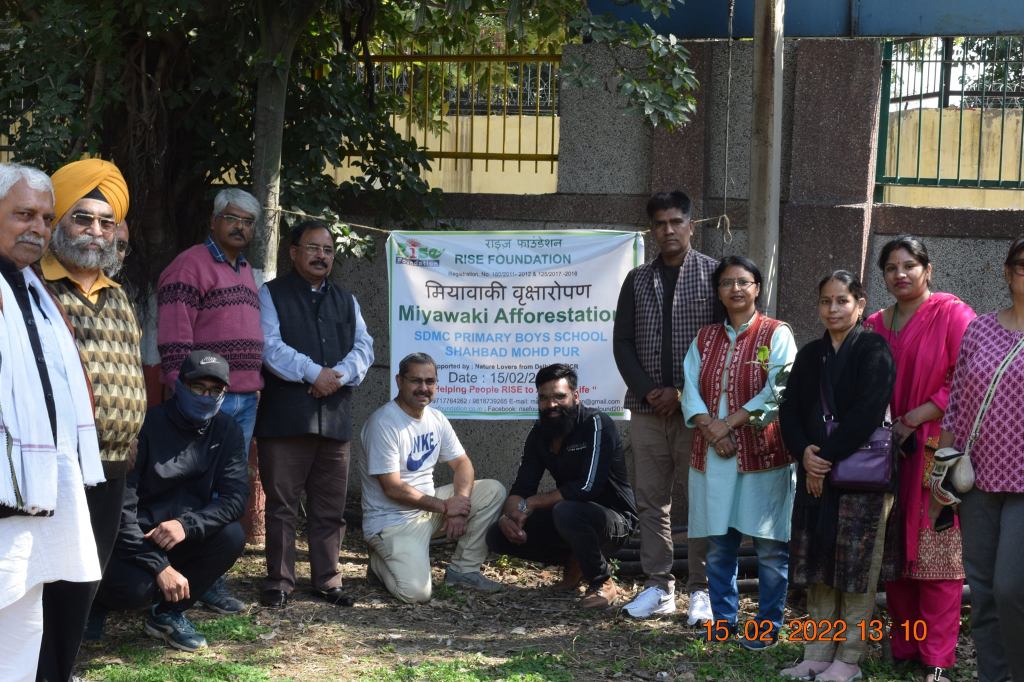
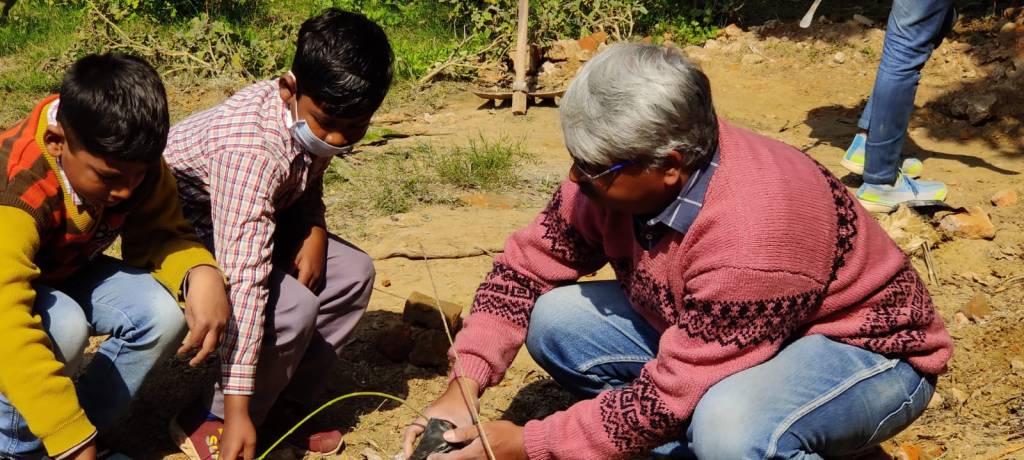
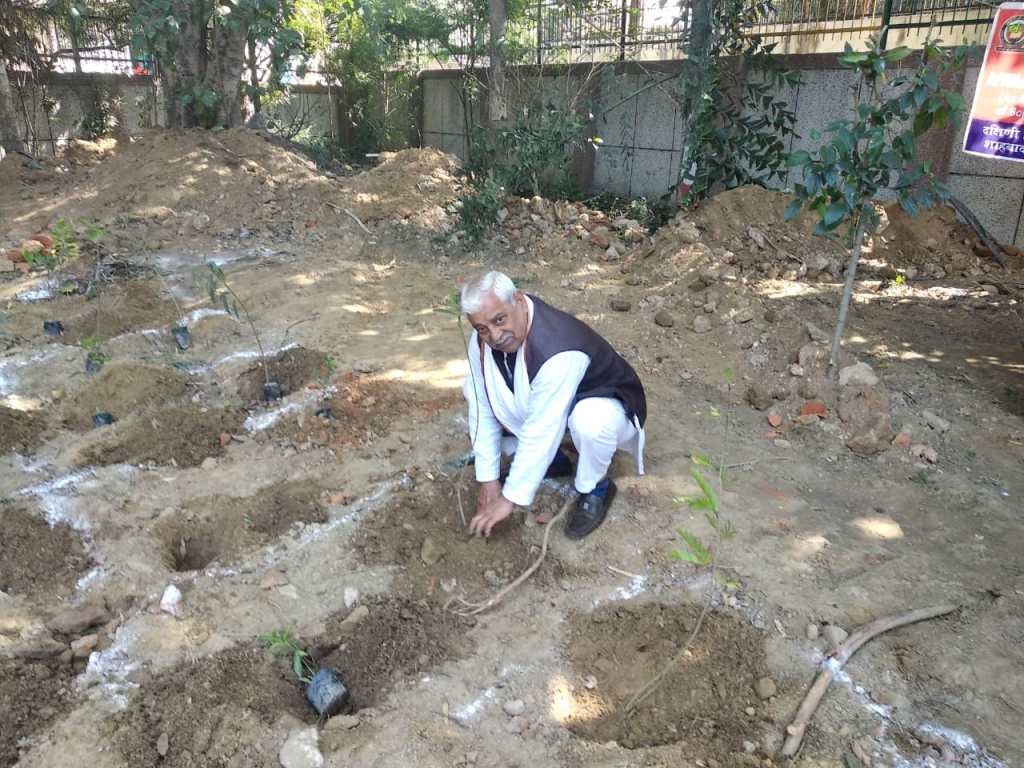
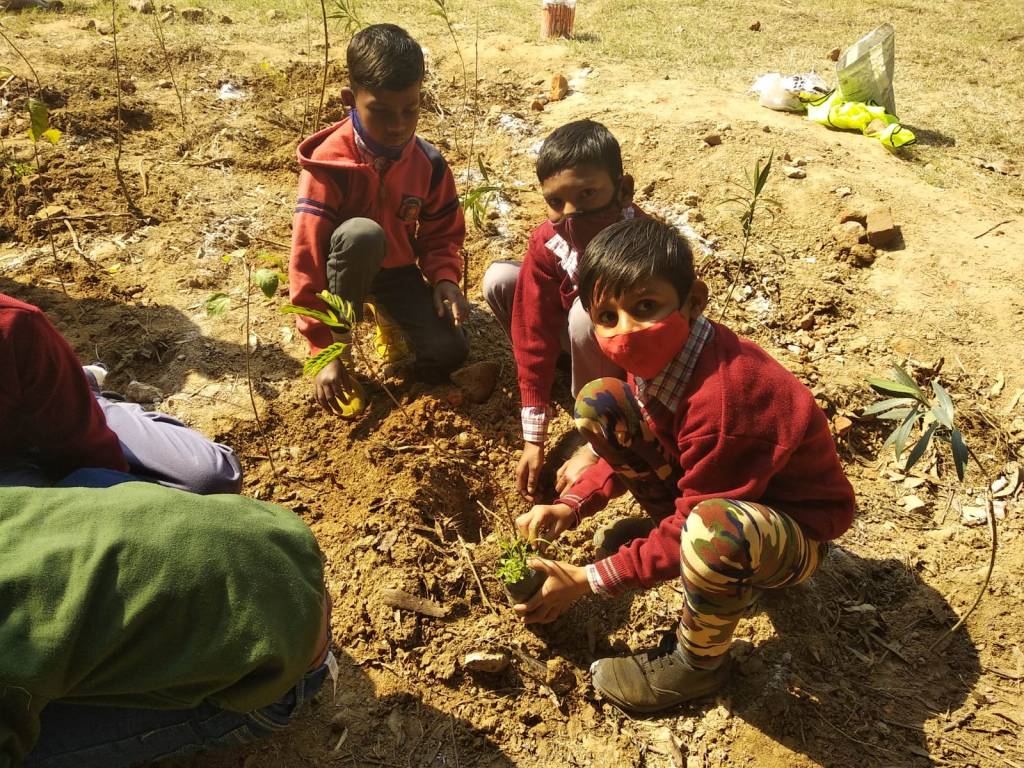
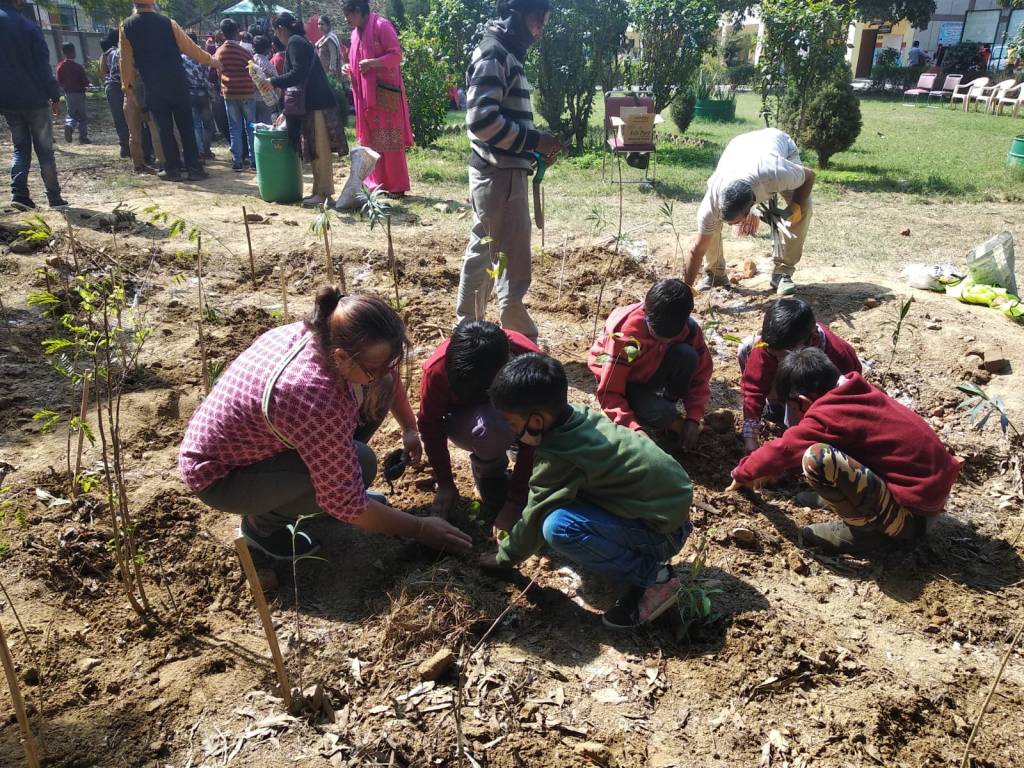
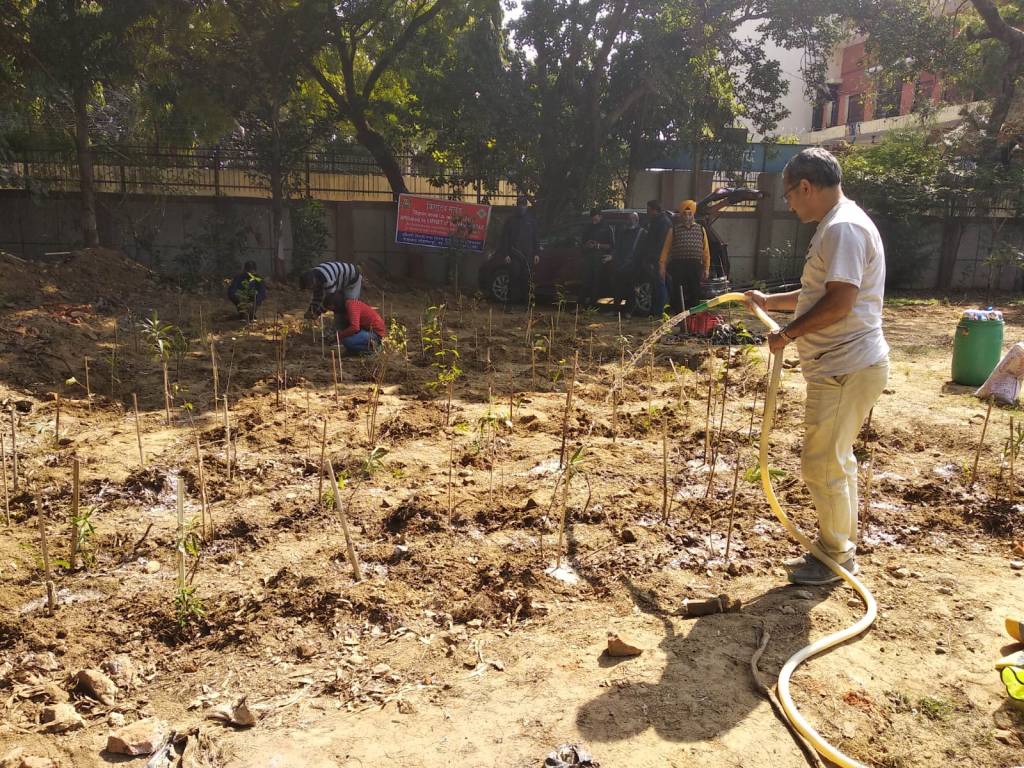
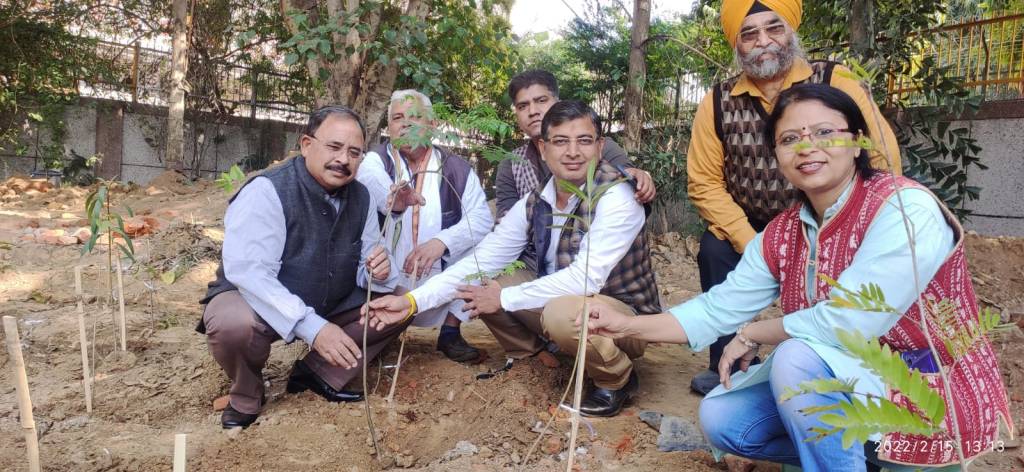
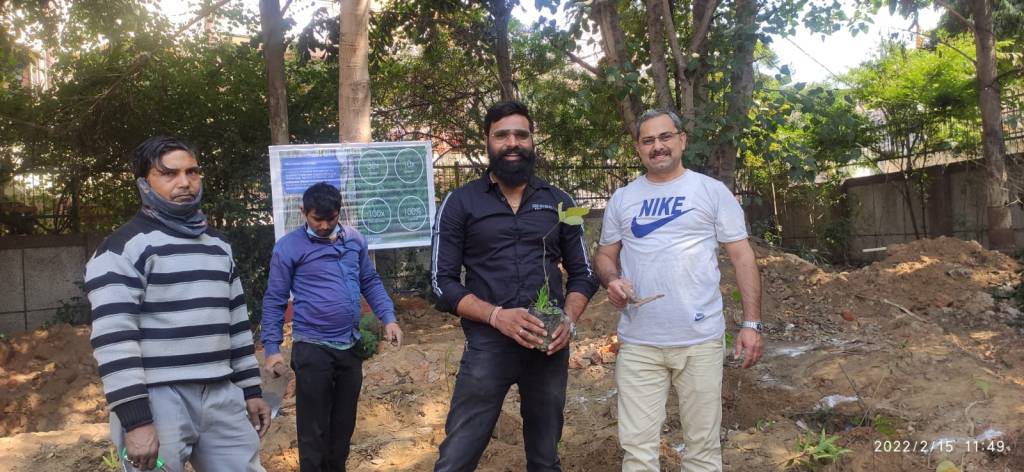
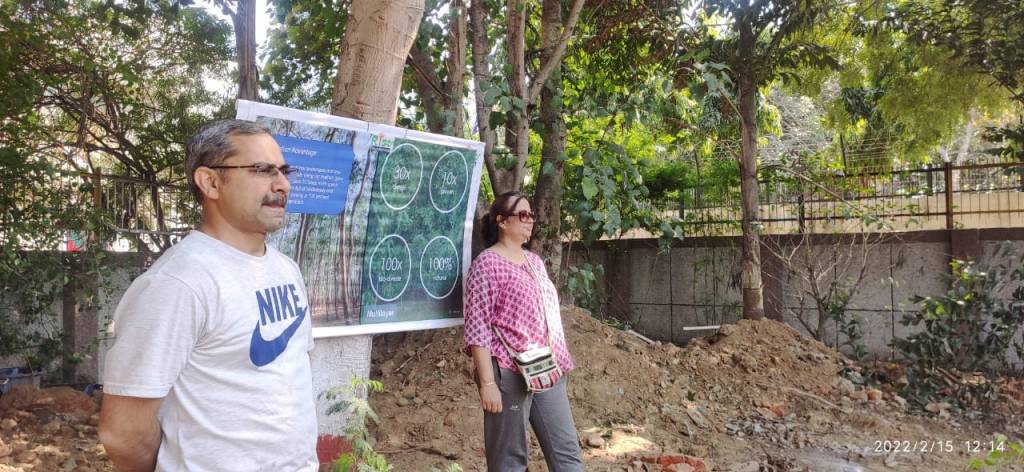
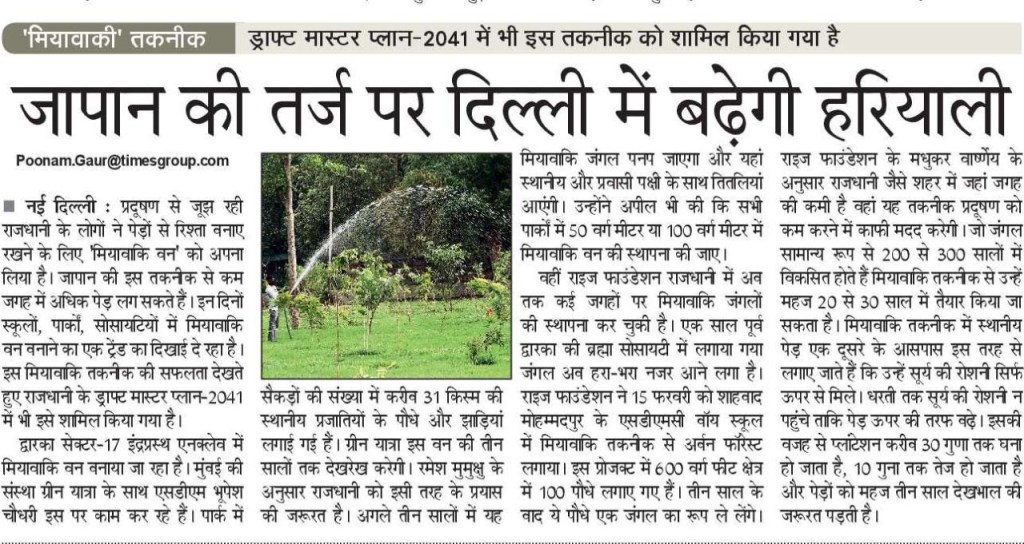
Under Azadi Ka Amrut Mahotsav (AKAM) – Rise Foundation in association ONGC Videsh with Govt School of Delhi Created a Tiny Urban Forest in West Vinod Nagar , New Delhi -92 using Miyawaki Method.
Project Details :
Size of Area : 600 Sq ft
Saplings : 120
Location : Rajkiya Sarvodaya Kanya//Bal Vidyala, West Vinod Nagar, ND-92
Date : 1st Dec 2021
Schedule of Activities :
Selection of Plants : Native trees of the region are identified and got the 120 saplings from Park & Garden Society Nursery at ITO (New Delhi). Neem, Jamun, Sehjan, Kaner, Gudhal, Anar, Karonda, Bamboo, Bel Patra, Mando, Mogra, Ratrani and Shami plants are selected for plantation.
Soil Preparation : After that, The quality of soil is analysed and biomass is mixed with it. Biomass mixing help to enhance the perforation capacity, water retention capacity, and nutrients.
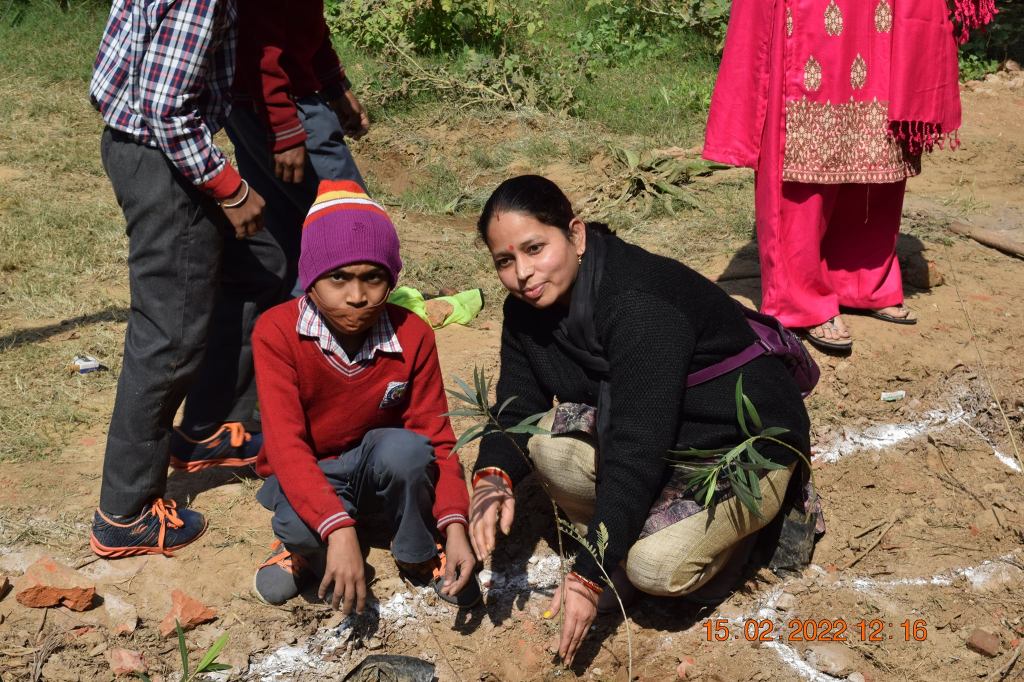
Plantation Day
A mound is built with the soil and the seeds are planted at a very high density. Furthermore, the ground is covered with a thick layer of mulch.
Multi-layered saplings are planted close to each other. This blocks sunlight from reaching the ground and prevents weeds from growing. It also keeps the soil moist.
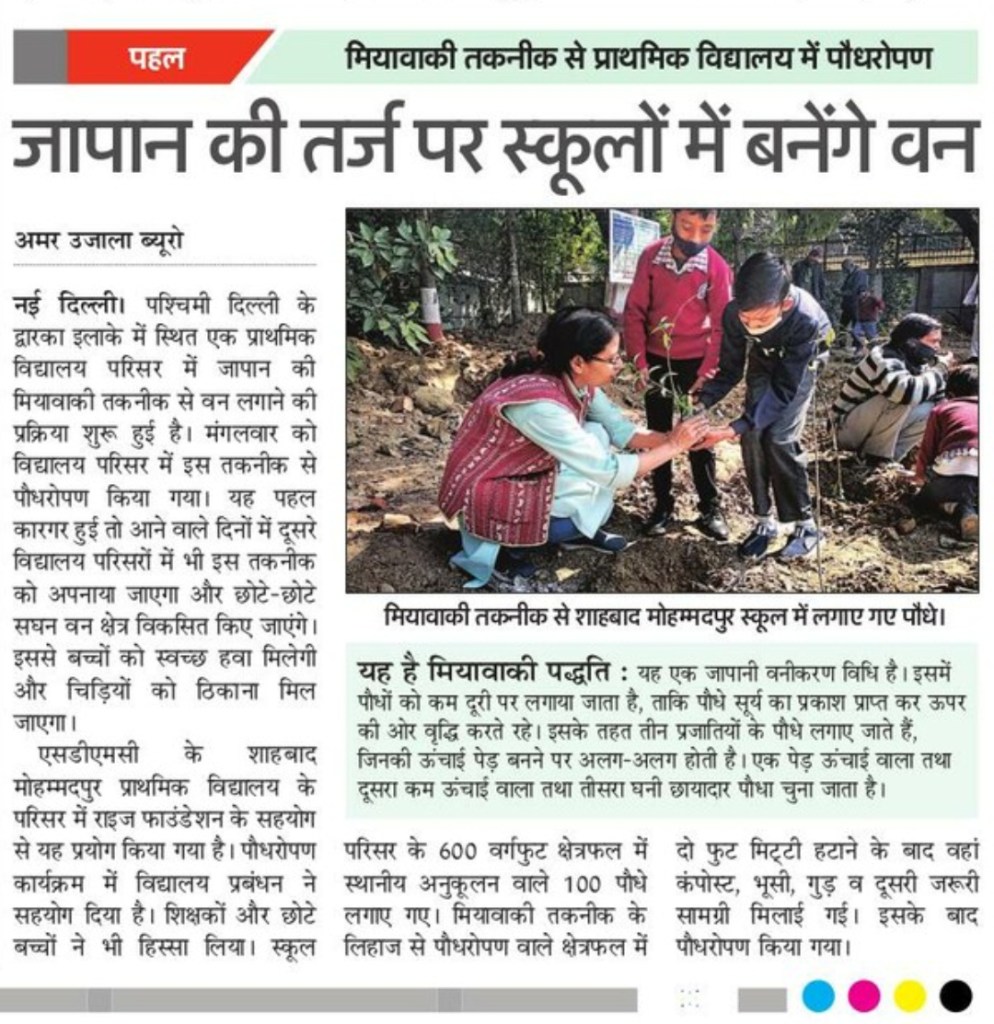
The close cropping also ensures that the plants receive sunlight only from the top. It enables them to grow upwards rather than sideways.
Benefits of Miyawaki Method:
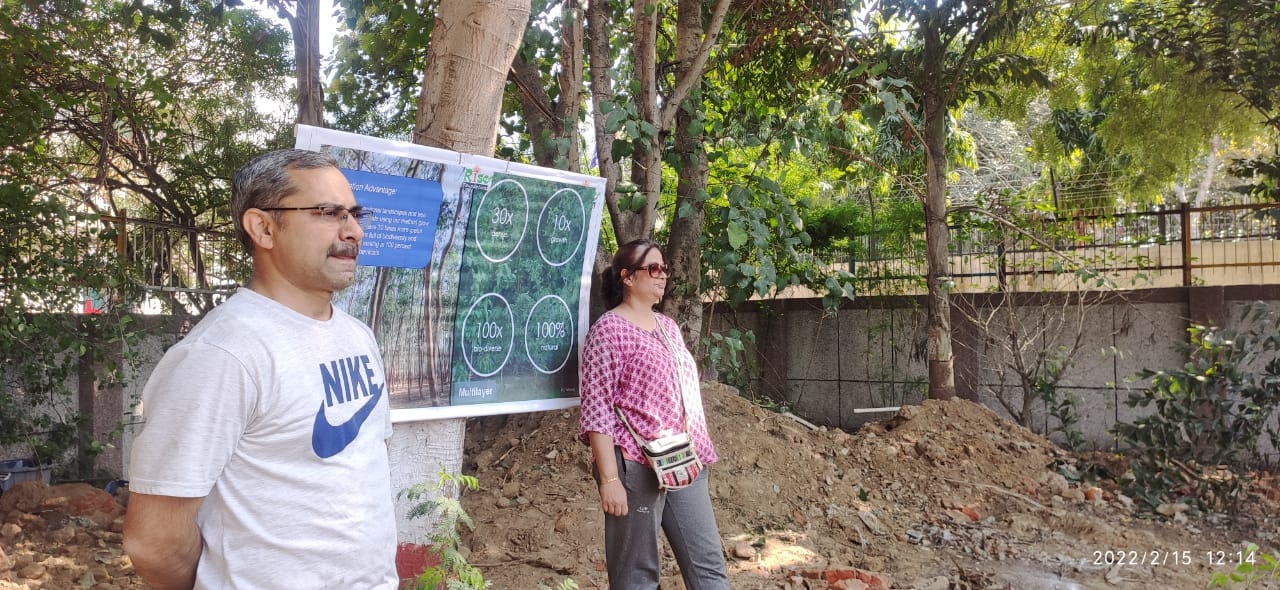
Faster Process and Dense Forest: This method creates mini forests. They grow 10 times faster and become 30 times denser and 100 times more biodiverse than those planted through conventional methods.
Faster Regeneration of Land: Miyawaki forests are designed to regenerate land in far less time. It takes over 70 years for a forest to recover on its own.
Self Sustainable: The saplings become self-sustainable after the first three years.
Environmental Benefits: These mini forests help lower temperatures in concrete heat islands, reduce air and noise pollution, attract local birds and insects, and create carbon sinks.
The impact of Miyawaki Forests:
The Miyawaki forest technique has been a savior to the cities. The forest serves as an oasis in the concrete jungles. The trees help to lower air temperature, improve air quality, increase groundwater and invite local biodiversity. The native trees provide habitat and food to local varieties of butterflies, birds, and mammals like squirrels. In various cities of the world, the Miyawaki technique has led to a movement of ecological regeneration. Previously degraded lands like dump yards and landfills have been given a new life.
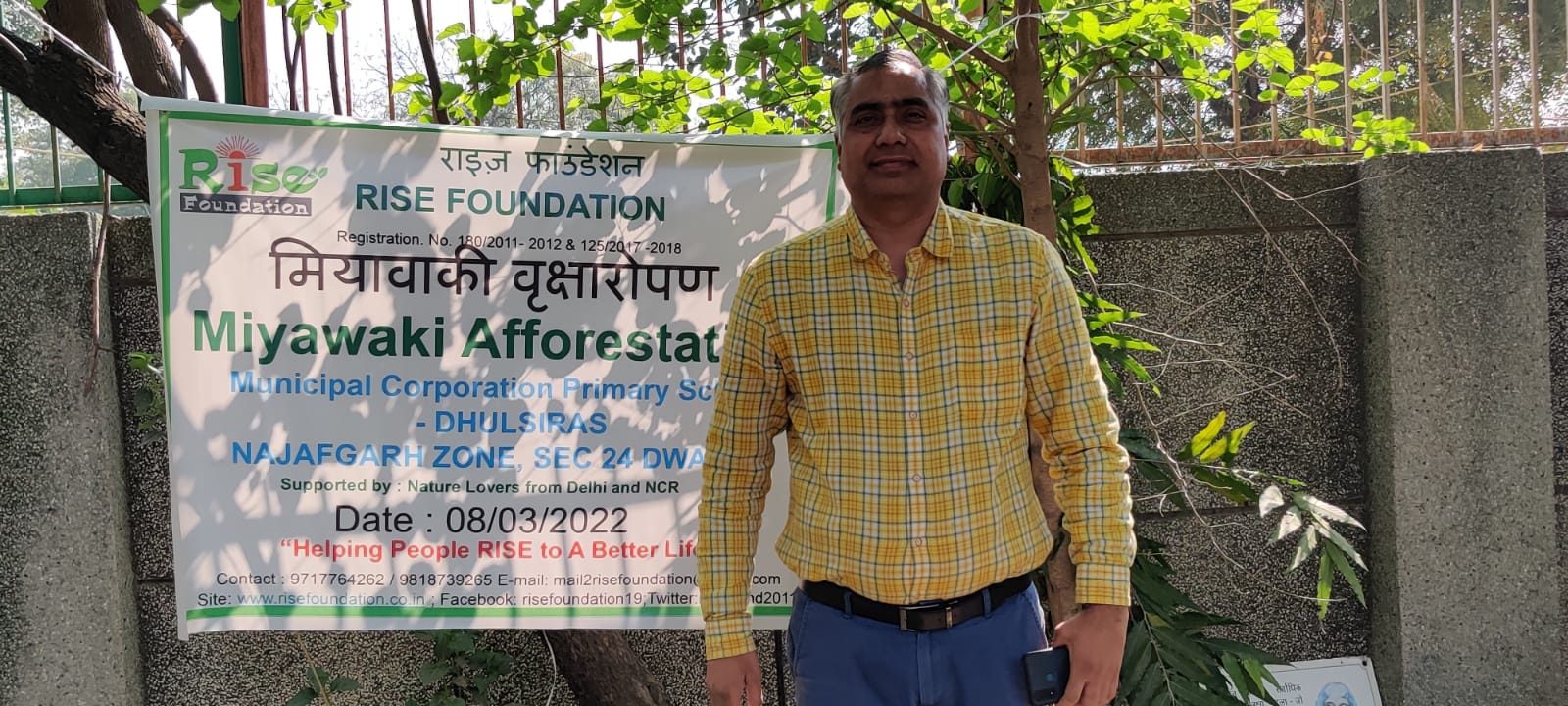
We thanks to Ms Renu Madhok from ONGC Videsh to thought of the project under Azadi Ka Amrut Mahotsav (AKAM) and reach Mr. Madhukar Varshney (Founder – Rise Foundation).
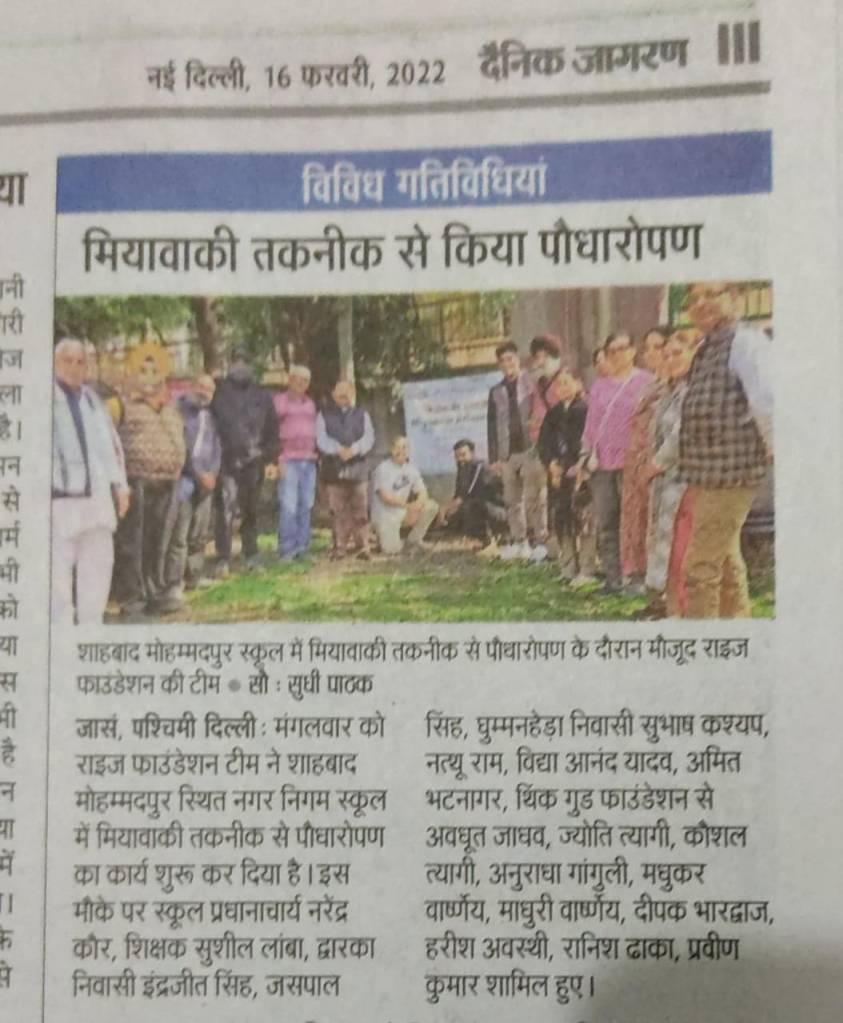
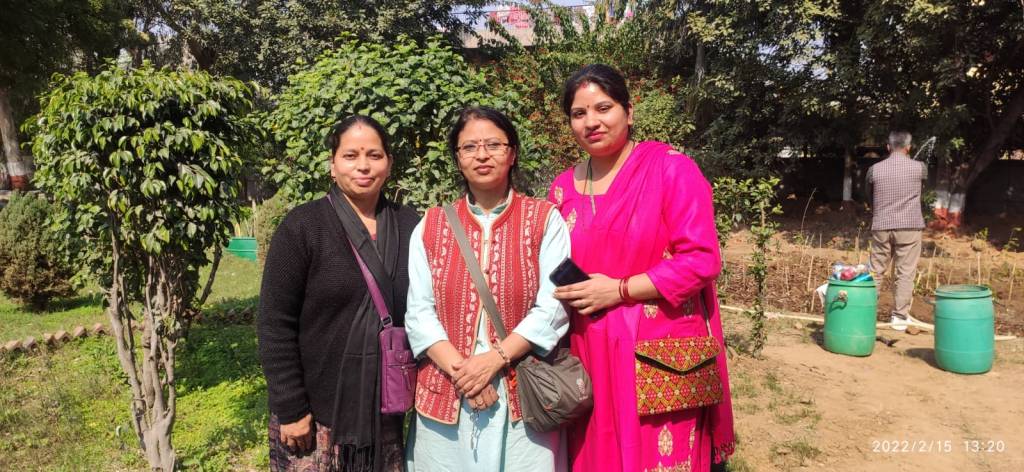
Additional thanks to Principal maam and Mr. Sevaram – Estate Manager School to identify the suitable place and allow us to carry out the project. Special thanks to Mr. Malik -NCC Teacher and other teachers who mobilised the NCC Cadets and girls to become part of the project.
Gratitude to all Rise Foundation team mebers including Munish Kundra, Madhuri Rawat Varshney, Mr. Indrajeet, Sheela ji , Prashant and others. We must say that this project was one of the fastest project we ever had. After approval of project , we completed the project in 5 working days with all logistics.
With this project , we successfully completed 5 Miyawaki Afforestation projects covering 5300 Sq ft area with 1120 saplings in last 2 years in Delhi-NCR. We are committed to maintain these forest for next 3 years. If any one is interested to create Miyawaki Urban forest, please feel free to reach us at +91 9717764262 or mail us at mail2risefoundation@gmail.com
“If you’re changing the world, you’re working on important things. You’re excited to get up in the morning.” – Larry Page
Date : 21st Oct 2021 Timing: 10AM
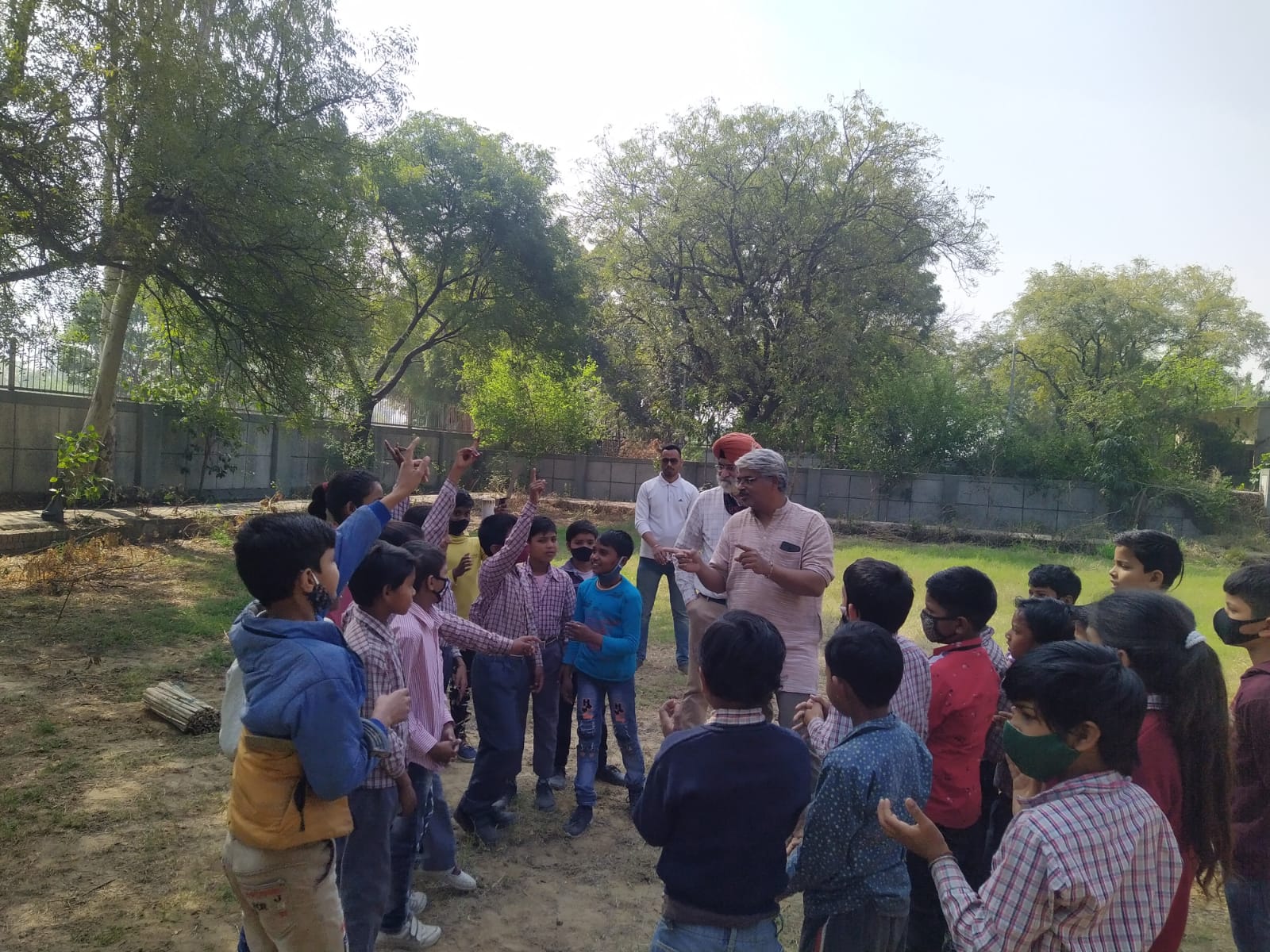
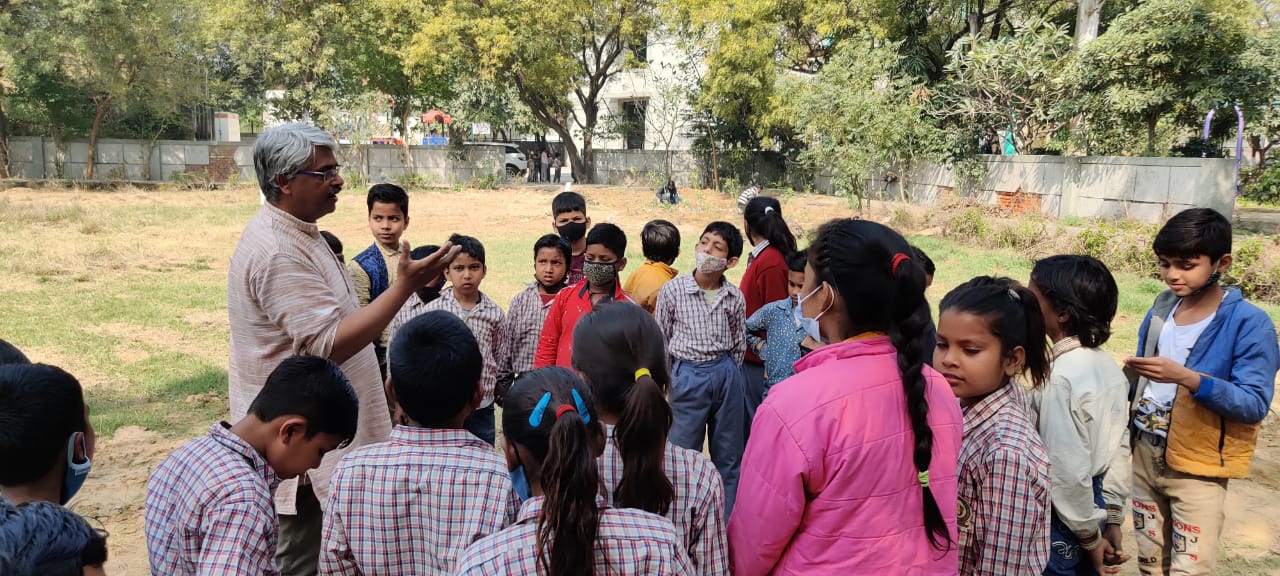
Team Rise Foundation imparted the information on Plastic Pollution , Ocean Pollution and Simple yet powerful solution – Ecobricks. Students and teacher appreciated and taken pledged to keep school campus clean. They shown willingness to create awareness in their village Bamnoli, as they well understood that littering and choking of sewer lines are due to plastic waste and now they have solution to fight this.
Some of the ideas tossed by students and teachers,we can make:
1. Tree guards
2. Small height tables required in art classes
3. Walls Partitions at home, at school
4. Barricades at road to create awareness to larger population
Plastic pollution is a global problem that requires collective action to solve. The production of plastic products has grown exponentially since the material was invented, but today only 9% is recycled. Inefficient recycling systems and the chemical compositions that make plastic unable to fully decompose spell new problems for our planet and our health — we now see plastics on our beaches , in our oceans and even in the stomachs of animals and people.
“The benefits of ecobricks building technology cannot be underestimated. Adopting Green building technologies serve as one of our best strategies in addressing climate change.
“We must understand that ecobricks buildings guarantee energy efficiency, better indoor air quality, less water usage, waste management, and much more,” the expert Mr Bulus said, the founder of Bridge-that-Gap Initiative, an environmental non-profit organisation.
Hence, we are here to create awareness on the plastic pollution in order to bring more positive environmental impacts . Ecobricks is one of the simple yet powerful solution to fight plastic pollution.
If you want such session in your school,college, community. Contact team Rise Foundation NGO at 9717764262 Thanks to Munish KundraAnuradha Ganguly Ramaswamaiah and school management specially Santosh maam ( geography ) and HOS Sir for sharing the knowledge and thoughts to young minds.
This is revolutionary composter , having following features: 1) Twin drum design to do COMPOST without interruption 2) Easy to turn 3) Adequate aeration & moisture control 4) Drums are made of strong UV stabilized polyethylene 5) Fully enclosed for excellent odour control 6) Easy way to convert waste into Compost in 2-4 weeks after completion of first cycle of 30 days. 7) Colourful, Aesthetic look 8) It is User friendly, budget friendly. 9) Capacity : Each drum 60 Ltrs/200 Ltrs (Two Adjacent Drums) 10) Exclusively designed for small houses, flat owners who can locate in their balcony or washing Place
This drum composter is manufactured with top grade UV stabilized polyethylene which is rust free & lasts long. Offered drum composter is an easy way to turn your waste into nutrient rich soil. Our offered drum composter is tested on numerous parameters by our quality controllers so as to assure its flawlessness.
Other Features:
First time in India! Specially designed for rapid and guaranteed results
For quick & convenient way to recycle all Organic waste around you
New age solution to Organic waste
An easy way to turn your rubbish into nutrient rich soil
Drum is made out of UV stabilized polyethylene which is rust free & lasts long
Moulded paddles are provided on the periphery protruding on inner face acts like blades for proper mixing
Door of adequate size provided for easy filling of the waste and dispensing the cooked compost
Fully enclosed for excellent odour control.
Air vents on side as well as on periphery provided for adequate supply of oxygen – the key ingredient of Composting
Polyethylene foam sandwiched layer retains the heat and provide warm climate inside the drum for better microorganism
Bearing on stand, and handles are provided for easy turning
Above ground design keeps critters away
Price : Rs 8200/- ( 120Ltr) , Transportation charges will be extra( Before ordering please get confirmed that your pin code/locality is reachable by regular courier companies).
For individual or bulk ordering, please contact or whatsapp at +91 9717764262 / +91 9717096635 or mail for at mail2risefoundation@gmail.com
While plastic has many valuable uses, we have become addicted to single-use or disposable plastic — with severe environmental consequences. Around the world, one million plastic drinking bottles are purchased every minute, while 5 trillion single-use plastic bags are used worldwide every year. In total, half of all plastic produced is designed to be used only once — and then thrown away.
Team Rise Foundation NGO given an awareness session on Plastic pollution and Ecobricks to the young , enthusiast , bright students of School of Excellence ,Sec 22,Dwarka on 6th Oct 2021.
Young mind think differently, one of girl suggested to use the structure (3Kg or 5Kg weight) made out of ecobricks as dumble for exercise !!One tall student infact tried the strength of the structure made. We were astonished that 3Kg of structure can hold 120Kg weight easily.
Principal maam is planning to make benches at open space in school for sitting purposes. Students pledged to not generate plastic waste and will make ecobricks if get any plastic waste.
It is duty of every one of us to start switching to reusable products , biodegradable products , ecofreindly products.
We need to slow the flow of plastic at its source, but we also need to improve the way we manage our plastic waste. Because right now, a lot of it ends up in the environment.
Only 9% of all plastic waste ever produced has been recycled. About 12% has been incinerated, while the rest — 79% — has accumulated in landfills, dumps or the natural environment. Cigarette butts — whose filters contain tiny plastic fibres — were the most common type of plastic waste found in the environment in a recent global survey. Drink bottles, bottle caps, food wrappers, grocery bags, drink lids, straws and stirrers were the next most common items. Many of us use these products every day, without even thinking about where they might end up.
If current trends continue, our oceans could contain more plastic than fish by 2050.
A 2015 study conducted by the Central Pollution Control Board (CPCB) in 60 major Indian cities estimated that these cities were generating around 4,059 tonnes of plastic waste daily. Extrapolating the data for the entire country, an answer to a question in Parliament estimated that the figure would be 25,940 tons a day. Delhi topped the list with 690 tonnes of daily plastic waste, followed by Chennai, Kolkata and Mumbai.
Ecobrick: Advantages and Disadvantages
Ecobricks have many advantages over conventional construction materials. They’re zero cost, absorb abrupt shock loads, are reusable, easy to work with, lightweight, and repurpose the plastic that’s rapidly threatening to take over our ecosystems.
There are also downsides. Because ecobricks are plastic, like the plastic they’re comprised of, they don’t decompose. If they melt, they release gases that are harmful to human health and the environment. Plastic is made from oil, a fossil fuel.
Conclusion
Ecobricks certainly offer a ready-made solution to the immediate problems posed by plastic. They are a hugely powerful tool for cleaning up local areas, educating schools and communities, and creating structures that will stand the test of time.
Further thought should certainly be given to the longevity of the plastics and the potential environmental impacts further down the line. However, ecobricks certainly form a potent reminder of humankind’s poor management of waste and reinforce the need for radical change across the plastic industry.
For conducting such session is your known school ,college, colony, community or society, feel free to contact Madhukar Varshney at 9717764262 or Munish Kundra at 98187 39265.
“Lets come together and be part of history in making” Join Hands Together for Clean India
Team Rise Foundation was invited to participate month long “Clean India “Program by DM Kapasheda IAS Shri Naveen Agarwal on 1st Oct 2021 at Ramleela Ground , Sector 10, Dwarka (New Delhi).
To celebrate Azadi Ka Amrit Mahotsava, Deptt. of Youth Affairs, Ministry of Youth Affairs and Sports is undertaking “Clean India” Program. The program is aimed at creating awareness, mobilization of people and ensuring their involvement in the Clean India initiative which is unique in terms of scale and participation. One of the objecive of the program is to organize activities to clean waste mainly Single Use Plastic waste throughout the country from 01st October to 31st October 2021.
Team Rise Foundation, showcased the small structure from Ecobricks made by Member Mr. Munish Kundra to the Chief Guest. Additionally, Rise Foundation Founder Mr. Madhukar Varshney share his thought about ill effects of Single Use plastics and Small size MLP which are not collected by recyclers , so mix with other waste easily. These plastic waste is main cause of death of many sacred cows who eat the polythene by mistake. This plastic is also polluting our rivers and Oceans also.
We asked DM office to provide us the PET bottles and Plastic waste for making structure at DM office premises. We have made bench from Ecobricks in Dwarka, which captured almost 15Kg of Plastic waste at Source.
Bench made from Ecobricks at Brahma Apartments, Sec 7, Dwarka.
History of Ecobrick?
Ecobricks were first made in number and utilized on a community scale in Guatemala in 2003 with Susana Heisse’s project Pura Vida Atitlan. Since then numerous projects have been started all around the globe.
What is an Ecobrick?
An Ecobrick is a plastic bottle filled, and packed tightly with none recyclable materials so that it can be used as a building block for a structure. Pretty much becoming a brick, made of plastic.
“The first step toward change is awareness. The second step is acceptance.” – Nathaniel Branden
We thanks to whole heartily the administration of Indian Educational School, Kuwait for showing interest in learning more about “Plastic Pollution and Ecobricks ” and arranged a wonderful and interactive session with School students from Class 6th to 9th. 100+ students participated in this online session. The session was conducted on 30th Sept 2021.
Team Rise Foundation delighted to share the problem of Plastic Waste in Kuwait and how the Kuwaiti desert & beaches are filled with plastic waste. The marine life is in danger because of these pollutants. Since the Country is situated near the Sea side, the route for traveling trash from surface to sea is easier. Some facts about Kuwait waste problem are as follows:
•Kuwait generates 1.5 kilograms of trash per person per day, twice the global average. •2 million tons of solid waste is generated annually •Approx 18 – 20% is plastic waste •90 per cent of waste – from food to sewage to petroleum – ends up in landfills
The total land area of Kuwait is around 17,820 sq. km, out of which more than 18 sq. km is occupied by landfills. Area of the landfill sites ranges from tens to hundreds of hectares with waste deposition depth varying from 3 to 30 meters.
Most of the landfill sites have been closed for more than 20 years due to operational problems and proximity to new residential, commercial and industrial areas. These sites include Sulaibiyah, Kabed, Al‐Qurain, Shuaiba, Jleeb AI Shuyoukh, West Yarmouk, AI Wafra among others. Migration of leachate beyond landfill site boundaries is a frequent problem noticed across Kuwait. Groundwater contamination has emerged as a serious problem because groundwater occurs at shallow depths throughout the country.
Kuwait’s enormous tyre graveyard is home more than 7 million end of life rubber tyres.Sulaibiya is an area within Kuwait which houses gigantic craters filled to the brim with worn tyres that have no use. After thousands of miles on the road, these old tyres end up piled up here and can now be seen from space.
There are many events visible on social media, which talks about how desert and marine are filled with plastic waste.
There are many steps are taken by the Kuwaiti Govt, but it is learnt that the plastic recycling facilities are not many in the country, which means, mostly waste is dumped into landfill, where it is ill effecting the environment.
In second past of the session, we shared the simple yet effective solution “Ecobricks”. Some students were aware about ecobricks, but their perception was that developing countries may required ecobricks solutions. We corrected them that the Single use and MLP plastic is used across globe and it is littering around in every country like anything, So one should not discriminate the solution based on per capita etc.. Since we are the generator of this waste, it is our duty to find and apply the solution.
Many students asked abut any possible bacteria which can eat or decompose plastic. After intriguing, we found that ” Ideonella sakaiensis is a bacterium from the genus Ideonella and family Comamonadaceae capable of breaking down and consuming the plastic polyethylene terephthalate (PET) as a sole carbon and energy source”. But this solution is yet not commercially available.
At the end, we got the feedback and Vote of thanks from Mr. T Premkumar, Certificates to Team Rise Foundation Mr. Madhukar Varshney and Munish Kundra.
We look forward to have some action from Kuwait on fighting plastic pollution and making ecobricks.
About IES Kuwait : Indian Educational School in Kuwait is a part of Bharatiya Vidya Bhavan, a premier institution of education in India. Dr- K. M Munshi, a far-sighted visionary and a practical idealist, who was also one of the chief members of India’s constituent assembly.