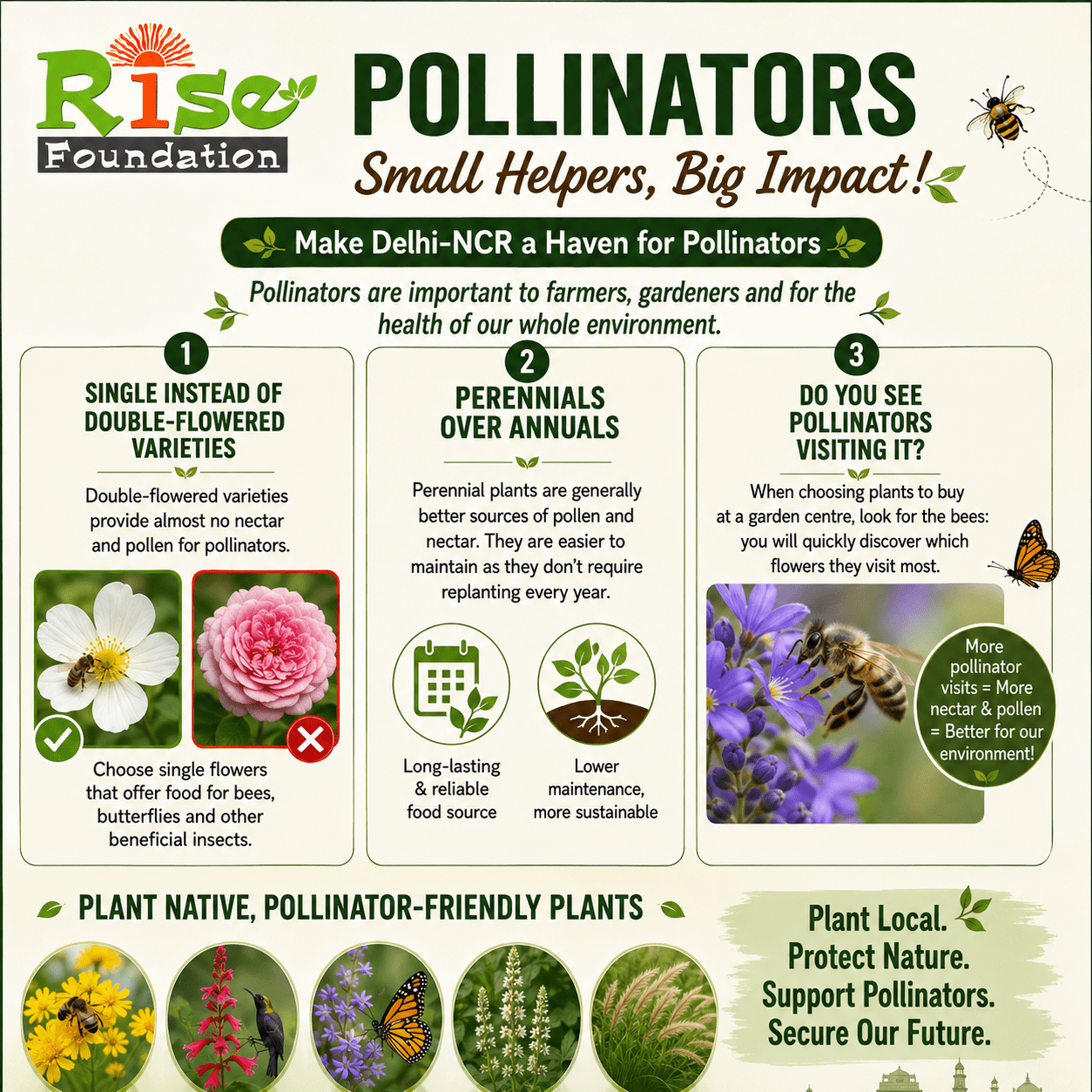
- Single instead of double-flowered varieties: double-flowered varieties provide almost no nectar and pollen for pollinators
• Perennials over annuals: perennial plants are generally better sources of pollen and nectar. They can also be easier to maintain as they don’t require replanting every year.
• Do you see pollinators visiting it? When choosing plants to buy at a nursery, look for the bees: you will quickly discover which flowers they visit most.
#ProtectNature #Biodiversity #SaveThePlanet #NatureConservation #Pollinators #SaveTheBees #InsectHotel #InsectHouse #WildlifeConservation #RestoreNature #Sustainability #ClimateAction #EcoFriendly #NatureMatters #GreenLiving #HealthyEcosystems #EnvironmentalAwareness #RiseFoundation #TogetherForNature
 Rise Foundation (NGO)