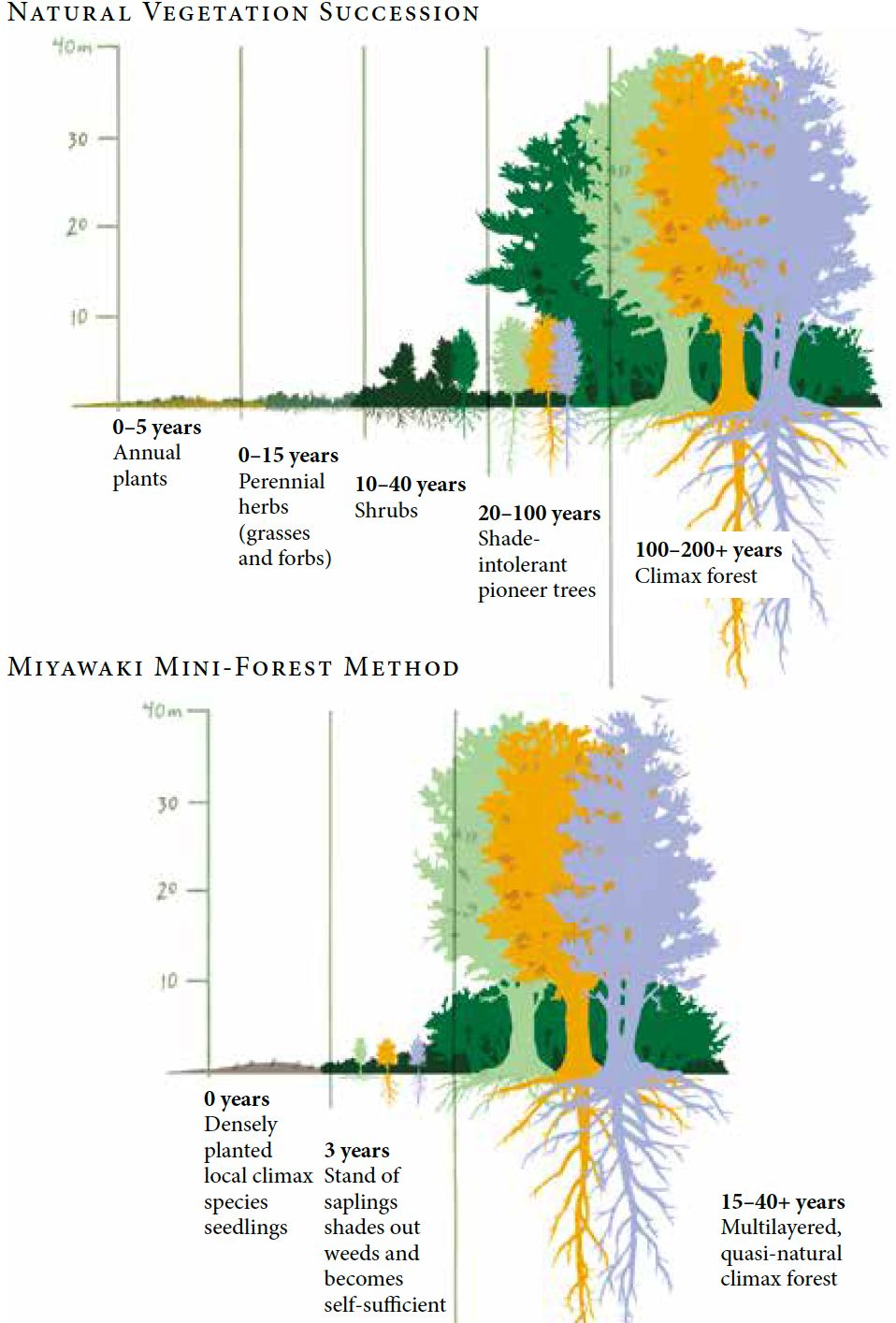
Miyawaki afforestation is a fast-growing urban forestry method that uses dense planting of native species to create self-sustaining mini forests in a short time. In India, it is widely used by NGOs, schools, corporates, and citizen groups to improve biodiversity, reduce heat, and build greener urban spaces.
What is Miyawaki?
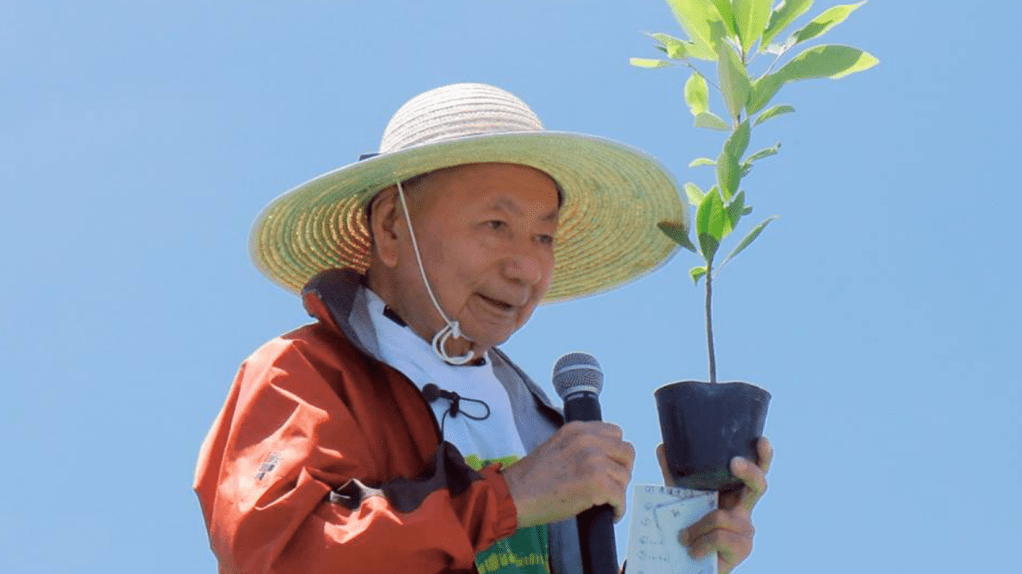
The Miyawaki method was developed by Japanese botanist Dr. Akira Miyawaki and is designed to recreate native forest conditions on degraded or unused land. It focuses on planting diverse local species very close together so they grow upward quickly, compete naturally, and form multiple layers like a real forest.
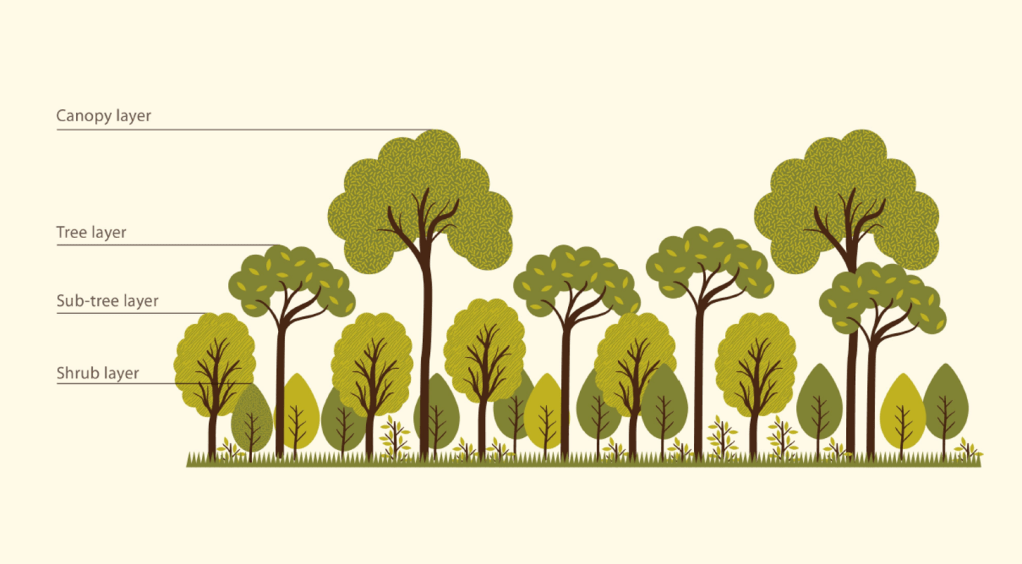
Unlike a standard plantation, Miyawaki forests are not arranged in neat rows. They are planted in a random, layered way with canopy, sub-canopy, shrub, and groundcover species, which helps the ecosystem stabilize faster.
Why it works
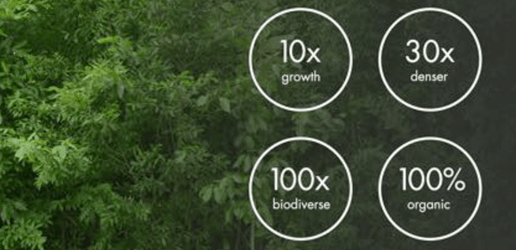
The method works because it combines native species, high density, soil enrichment, and early care. Sources describe Miyawaki forests as growing around 10 times faster than conventional plantations and becoming self-sustaining after about 2–3 years or roughly 3 years, depending on conditions.
These forests retain ground water, thus recharging the ground water table. They attract more birds, produce native fruits and improve air quality.
Dense native planting also creates a forest structure that supports birds, pollinators, and other wildlife more quickly than single-species plantations.
Benefits
Miyawaki forests offer several practical and ecological benefits. They can improve air quality, reduce local temperature, support biodiversity, and increase the green cover in cities where land is limited.
Key benefits include:
- Faster forest growth compared with conventional plantations.
- Better biodiversity because many native species are planted together.
- Stronger carbon capture potential due to high density and rapid biomass growth.
- Better dust and pollutant filtering in urban environments.
- Improved soil health and water retention through mulch and organic amendments.
Plant density
Planting density is one of the defining features of Miyawaki forests. Guidance sources mention about 3 to 5 saplings per square meter, while another handbook lists 2 to 7 trees per square meter depending on design and local conditions.
In practice, this means a 100 square meter plot may hold roughly 200 to 700 saplings depending on spacing, species mix, and the project design. A higher density encourages vertical growth, natural competition, and quicker canopy formation.
Cost per sq meter
Costs vary widely by city, soil condition, species choice, irrigation, fencing, and maintenance. One source estimates about ₹200 to ₹300 per plant for afforestation work, and ₹150 per plant for 3 year maintenance. For more information, feel free to reach Rise Foundation via email: mail2risefoundation@gmail.com or +91 9717764262
Species selection
Species selection should be local, native, and layered. The ideal forest uses a mix of major, supporting, and minor native species so the planting reflects the original ecology of the region.
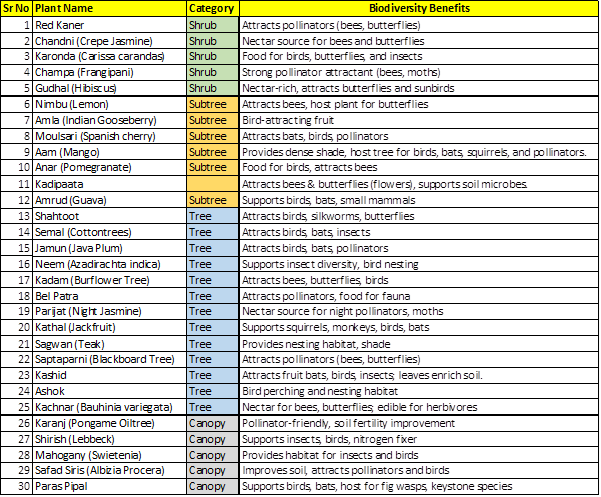
A common guideline is to choose at least five native genera and to make the dominant species roughly 40–50% of the forest, supporting species 25–40%, and the rest minor native species. Saplings are usually selected at around 60–80 cm height, which helps them establish quickly after transplanting.
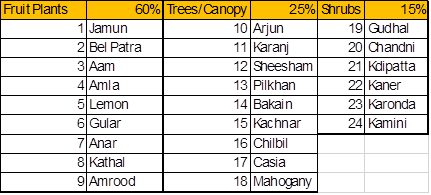
For India, species should be chosen according to local climate and soil. In north Indian cities such as Delhi-NCR and Uttar Pradesh, local nurseries and nearby native forest surveys are usually used to identify suitable trees rather than copying species from another region.
Soil preparation
Soil preparation is crucial because the Miyawaki method depends on root-friendly, nutrient-rich, moisture-retaining ground. The process usually begins with clearing debris, weeds, and waste, then checking soil texture, pH, organic carbon, nitrogen, and water-holding capacity.
The soil is then improved with organic material such as compost, biomass, rice husk, coconut husk, cow manure, vermicompost, and mulch. The West Bengal handbook also describes perforators, water retainers, fertilizers, and soil microbiology enhancers as part of the mix, and it recommends a 1-meter-deep excavation for a 100 square meter mound before re-filling and mixing the amended soil.
A good site should get at least 8 hours of sunlight, have space for irrigation, and allow proper drainage. The soil should stay loose and aerated so saplings can establish strong roots quickly.
Maintenance
Maintenance is intensive at first and then drops sharply. Most sources say the first 2 to 3 years are the most important period, during which the forest needs regular watering, weeding, monitoring, and mulching.
Typical maintenance tasks include:
- Watering daily or as required by rainfall, especially in the early phase.
- Keeping the area free of weeds, litter, and plastic waste.
- Maintaining mulch to protect moisture and soil life.
- Watching drainage so water does not collect around roots.
- Avoiding chemical pesticides and heavy pruning.
After the forest is established, maintenance becomes minimal. Several sources describe the method as close to maintenance-free after the first few years.
For more information, feel free to reach Rise Foundation via email: mail2risefoundation@gmail.com or +91 9717764262
CO₂ absorption
Miyawaki forests are often promoted for carbon sequestration because they grow quickly, produce dense biomass, and use many native species together. One bulletin states that these forests can provide “up to 30 times better carbon-dioxide absorption” than monoculture plantations, while another notes that they absorb more carbon than standard plantations because they contain more trees in a smaller area.
That said, exact CO₂ absorption depends on species, climate, soil, age, and water availability. For a blog, it is best to say that Miyawaki forests are generally considered to have high carbon capture potential, especially in cities where fast canopy formation matters.
Social Returns from the project:
Miyawaki, an innovative approach to urban forest creation, becomes imperative in the face of rapid city expansion and escalating deforestation. As cities grow, deforestation indirectly impacts our daily lives through heightened temperatures, compromised air quality, and increased noise pollution. Miyawaki emerges as a superior solution compared to traditional plantations, addressing these challenges effectively.
The significance of Miyawaki lies in its role as a carbon sink. Trees play a crucial part in absorbing carbon, and Miyawaki’s dense foliage in urban areas aids in air purification. The rapid growth rate of Miyawaki forests enhances their carbon consumption, contributing significantly to mitigating climate change. Beyond carbon sequestration, Miyawaki fosters biodiversity, providing habitats for various creatures within the cityscape.
Moreover, Miyawaki’s acoustic qualities play a pivotal role in controlling temperature, air pollution and noise pollution. The dense foliage acts as a natural buffer against urban heat, while the trees absorb and dampen noise, creating a more serene urban environment. In essence, Miyawaki not only combats environmental challenges but also enhances the overall well-being of urban communities.
Miyawaki transcends conventional plantations by offering not just environmental benefits but also medicinal and fruit-related advantages. Carefully selecting trees for Miyawaki forests can yield dividends in diverse forms. Some trees possess medicinal properties, contributing to the health and well-being of urban residents. Additionally, incorporating fruit-bearing trees not only enhances the aesthetic appeal of the environment but also provides a sustainable source of fresh produce for the community.
Beyond the tangible benefits, the aesthetic transformation of urban spaces through Miyawaki creates a visually pleasing landscape. The “feel-good” factor associated with lush greenery and vibrant biodiversity further elevates the quality of life for city dwellers. Furthermore, Miyawaki plays a crucial role in preventing soil erosion, as the dense root systems of the trees help bind the soil, reducing the risk of erosion in urban areas. This multifaceted approach reinforces the significance of Miyawaki as a holistic solution for urban sustainability and well-being.
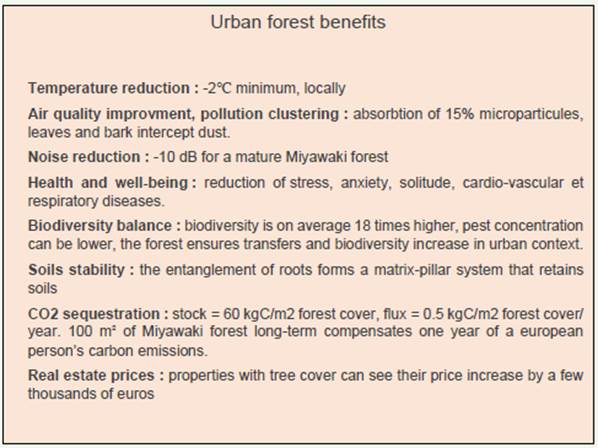
Ref: http://urban-forests.com – The Miyawaki method – Data & concepts
Rise Foundation cases
Rise Foundation has documented several Miyawaki projects across India. In one update, the organization said it completed 91 Miyawaki afforestation projects and planted more than 90,000 native trees.
A 2025 project in Delhi-NCR described a new green patch of 1,200 native trees at Max Hospital Dwarka, created under the “Green India ” movement. Rise Foundation has also highlighted projects in places such as Rishikesh, Vedatya Institute, Pyramid Valley International, and Dwarka, showing that the model is being used in schools, institutions, and urban public spaces.
Practical steps
A simple project flow for India is:
- Survey the site and confirm sunlight, drainage, and access to water.
- Study local soil and identify native species from nearby ecological conditions.
- Prepare the soil with compost, biomass, and mulch.
- Plant 2 to 7 or about 3 to 5 saplings per square meter in a layered, random pattern.
- Water and weed regularly for the first 2 to 3 years.
This sequence is important because Miyawaki forests fail when they are treated like ordinary tree-plantation drives instead of living ecosystems.
FAQ
How much land is needed?
A handbook notes that a dense Miyawaki forest is often set up on at least 1,000 sq ft, though smaller plots such as 100 sq ft are also possible.
How long does it take to mature?
Sources say the forest can grow much faster than conventional plantations, with a stable forest structure reached in about 20 to 30 years, while the early self-sustaining phase usually begins after 2 to 3 years.
Can it be done in Indian cities?
Yes. The method is widely used in India because it fits small urban plots, school grounds, campuses, and roadside patches where native green cover is needed quickly.
Is pruning needed?
The handbook says pruning should generally be avoided, because the goal is to mimic a natural forest rather than manage ornamental trees.
Is it expensive?
It can be costlier upfront than regular plantation because of soil improvement, dense sapling use, and early maintenance, but supporters argue the long-term ecological value is higher.
Closing note
For India, Miyawaki afforestation is best understood as a climate-action tool for urban and semi-urban spaces, not a replacement for natural forests. Its strength lies in using native species, dense planting, and careful early care to create fast, resilient microforests.
For more information, feel free to reach Rise Foundation via email: mail2risefoundation@gmail.com or +91 9717764262
 Rise Foundation (NGO)