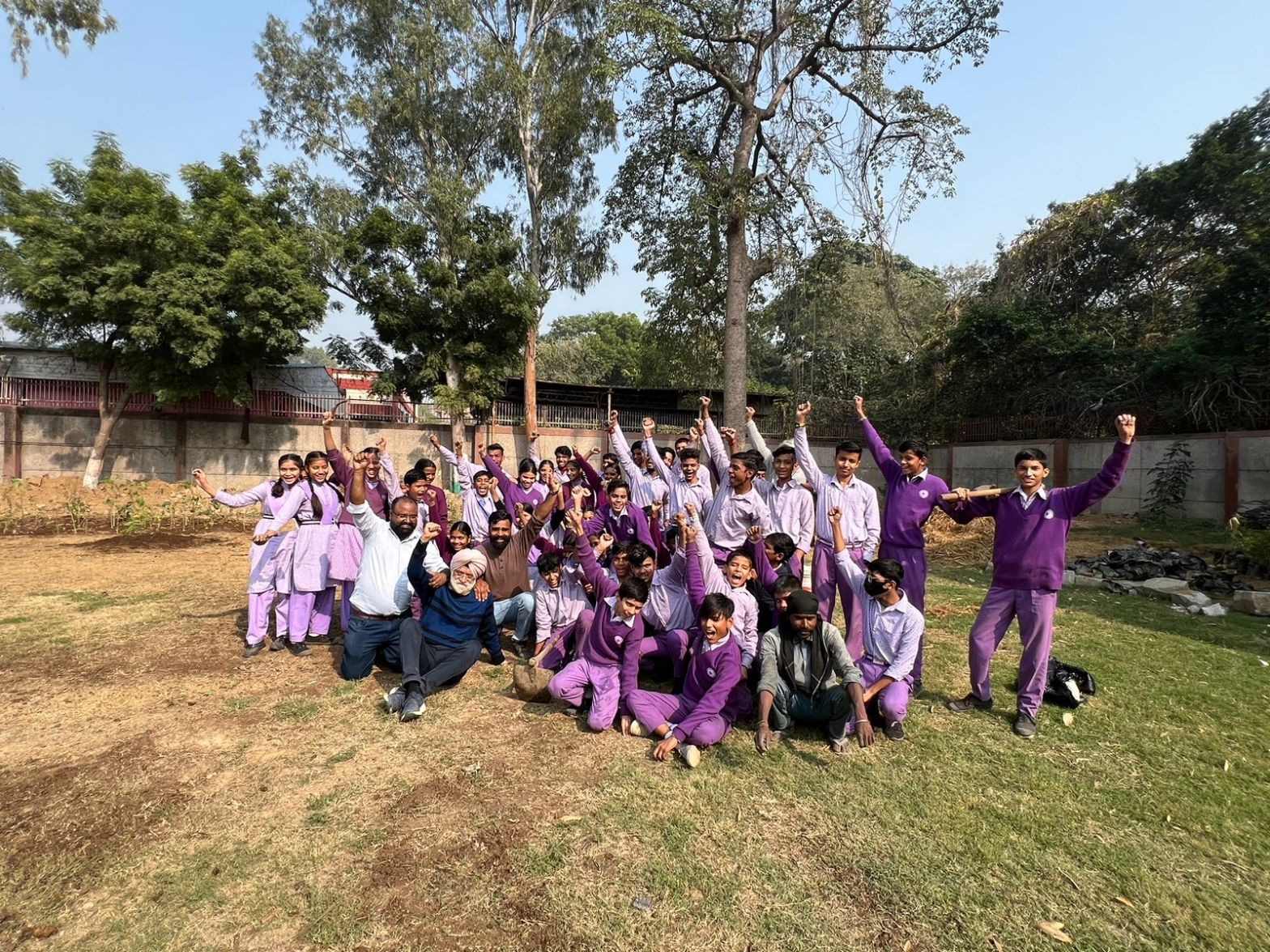
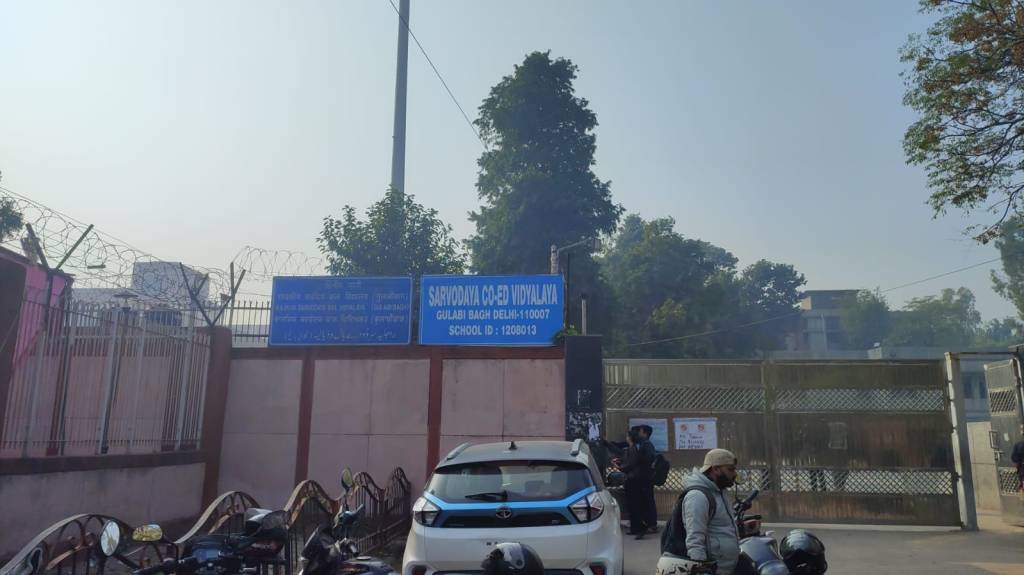
In the heart of Delhi, where the battle against air pollution and climate change rages on, a promising initiative is taking root. Rise Foundation in association with “Change Makers of Gurgaon and Nutan Dhara , a dedicated environmental organizations, has undertaken a transformative Miyawaki Afforestation Project at the Government School in Gulabi Bagh. This groundbreaking endeavor not only symbolizes a commitment to sustainable development but also serves as a local solution with global implications.



The Miyawaki Afforestation Method: Originating in Japan, the Miyawaki method is a unique afforestation technique that focuses on planting a diverse array of native tree species in a small, densely packed area. The goal is to recreate a forest ecosystem that grows rapidly, becoming a self-sustaining green lung for the environment. This method has gained prominence for its ability to accelerate tree growth and enhance biodiversity.
Addressing Air Pollution: Delhi has long struggled with severe air pollution, largely attributed to vehicular emissions, industrial activities, and crop burning. The afforestation project at Gulabi Bagh Government School is strategically positioned to combat these issues. Trees act as natural air filters, trapping pollutants and releasing oxygen. The dense planting of a variety of native species further amplifies this effect, creating a micro-ecosystem that actively purifies the air.
Carbon Sequestration: One of the primary drivers of climate change is the excessive accumulation of greenhouse gases, particularly carbon dioxide, in the atmosphere. Trees play a crucial role in mitigating climate change by absorbing carbon dioxide during photosynthesis. The Miyawaki Afforestation Project at Gulabi Bagh is a local solution with global implications, contributing to carbon sequestration and helping offset the carbon footprint of the densely populated urban environment.
Temperature Regulation: Asphalt and concrete surfaces in urban areas contribute to the “urban heat island” effect, causing localized temperature increases. The dense tree cover established through Miyawaki afforestation provides natural shade, reducing surface temperatures and creating a more comfortable microclimate. This not only enhances the well-being of the school community but also contributes to a broader effort to combat rising temperatures in the city.
Educational and Community Impact: Beyond its environmental benefits, the Gulabi Bagh afforestation project serves as an educational tool for students and the surrounding community. Students actively participate in planting and caring for the trees, fostering a sense of environmental stewardship. The project also encourages community engagement, promoting awareness and a shared commitment to a sustainable future.
Conclusion: Rise Foundation’s Miyawaki Afforestation Project at Gulabi Bagh Government School is a testament to the power of grassroots initiatives in tackling air pollution and climate change. By combining innovative reforestation techniques with community engagement and education, Rise Foundation is sowing the seeds of change that will undoubtedly have a lasting impact on Delhi’s environment and serve as inspiration for similar endeavors worldwide. As the trees rise, so does the hope for a cleaner, greener future.
Rise Foundation team is expert in establishing Green , Dense patches using Miyawaki Afforrestation technique. For more information, please reach us at mail2risefounfation@mail2risefoundation or contact us +91 9717764262
 Rise Foundation (NGO)